Hush Acoustics’ range of acoustic products and systems can play a key role in the creation of treatment rooms and consultation rooms, enabling practitioners to carefully balance client confidentiality and privacy with the need to ensure the spaces offer a comfortable, calm and relaxing environment.
Thousands of small – often independent – health, fitness, beauty and wellbeing businesses across the UK provide personal care, treatment and services – many of which supplement NHS services. Whilst the minimum acoustic standards applying to hospitals and larger healthcare facilities, such as Health Technical Memorandum 08-01, are unlikely to apply to new build and conversion projects when creating these smaller private practices, the requirements of the Building Regulations such as Part E in England & Wales do – even if planning permission is not required.
But there is another reason beyond compliance why good acoustic control should be a priority in these projects – and this applies to procedure rooms, salons and studios too. Sound insulation and noise control make a significant contribution to creating the right quality environment for patient satisfaction to be maximised, ensuring they feel comfortable, safe and keep coming back for future appointments. This means a joined up approach to building acoustics makes good commercial sense too.
Hush Acoustics can advise on the right solutions to help reduce sound transmission through walls, floors and ceilings, as well as to minimise background noise within treatment rooms. Whilst these objectives require different approaches, good practice is to consider and address their potential nuisance at the design stage.
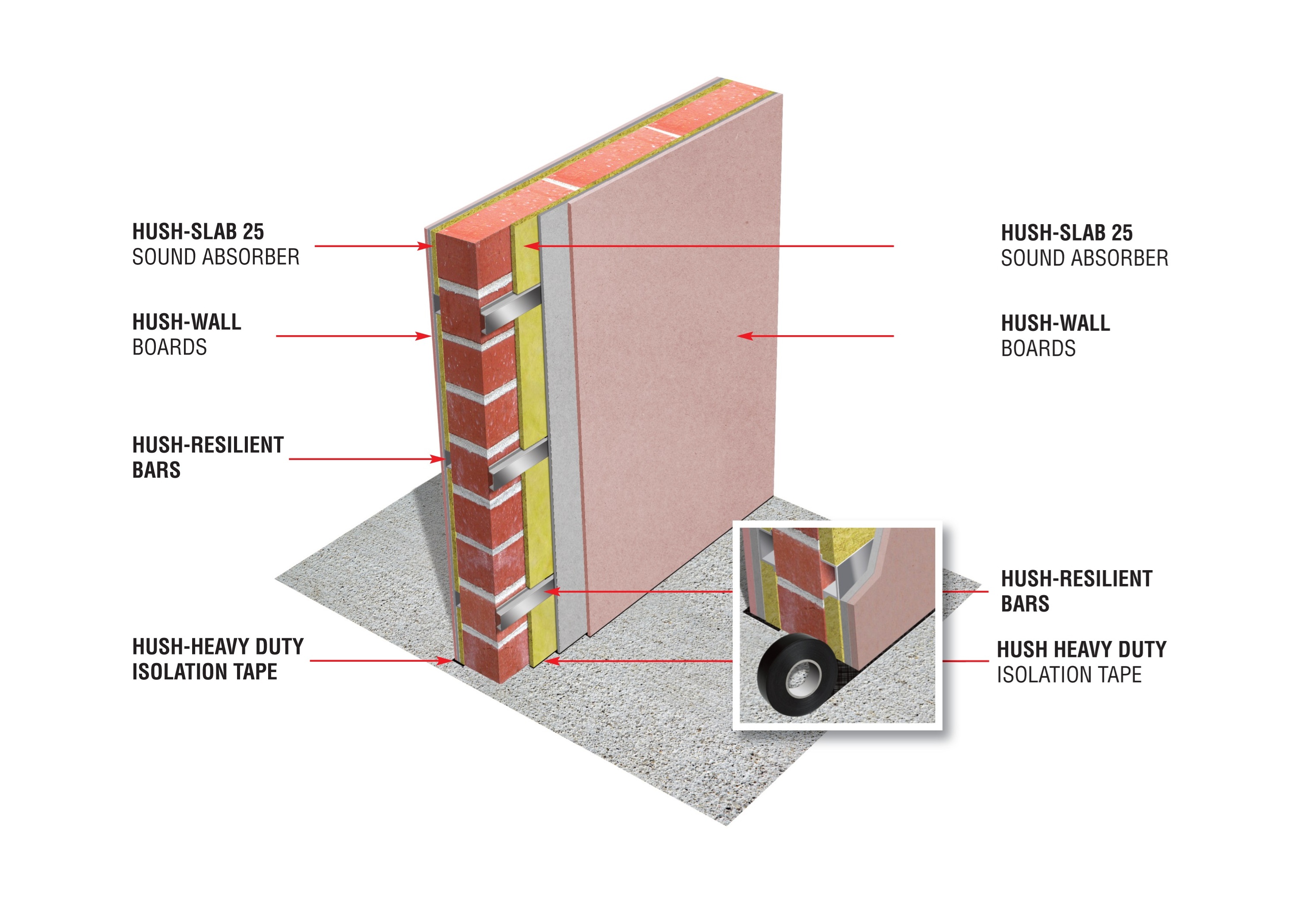
Ensuring that walls, floors and ceilings are sufficiently insulated to reduce sound transmission can be achieved by applying one of Hush Acoustics’ fully tested, off the shelf acoustic systems. These cater for numerous different construction types, whether that is masonry, timber or steel, and the target level of sound reduction.
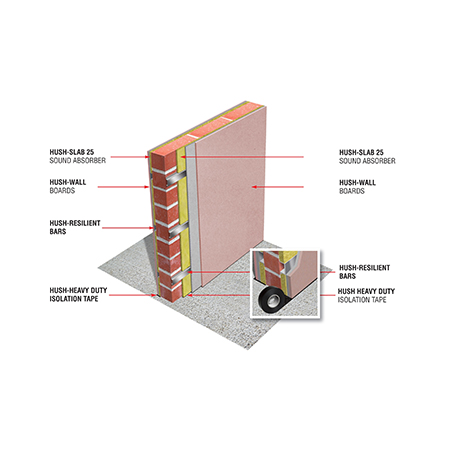
For example, to reduce sound transmission through a metal stud wall so that the sound of people talking cannot be heard in adjacent rooms, such as a waiting room, the Hush HD1053 Single Metal Stud Wall or the HD1052 Double Metal Stud Wall could be applied. Or if the wall is of a masonry construction, the HD1041 Acoustic Wall Lining System or HD1057 Masonry Acoustic System could be deployed.
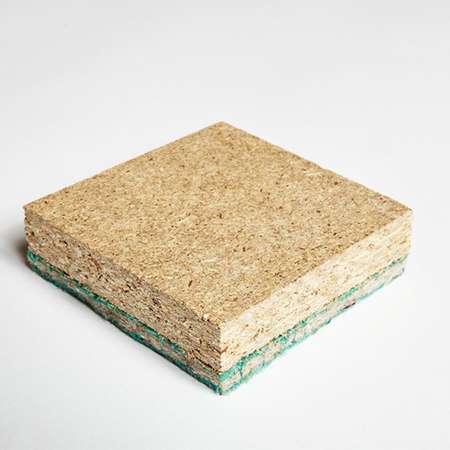
Floors and ceilings in treatment rooms can be treated equally effectively through the Hush systems for both timber and concrete/masonry floor construction. Each of these is designed to provide a floating floor, which decouples the floor surface from the structure and helps to absorb impact sounds from activities such as footsteps. In addition, they also incorporate materials to reduce airborne sound transmission such as Hush Slab sound absorbers, with all the perimeters sealed to prevent flanking (the issue of sound leaking through gaps).
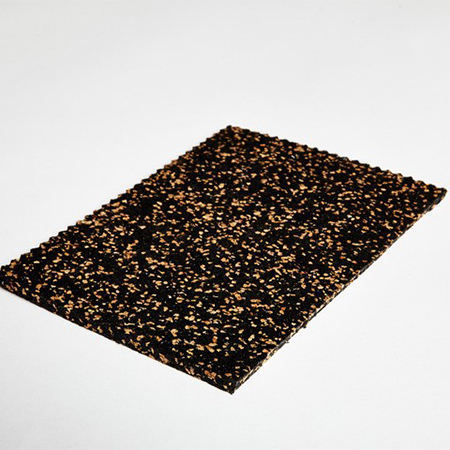
In some cases, a bespoke acoustic system may provide the most effective solution, which can be achieved by adapting an existing system or starting with a completely new design. This can utilise an extensive range of Hush Acoustics products which spans everything from metal frame suspended ceiling systems, resilient bars and acoustic battens to rubber floor mats, high mass overlay boards and isolation tape.
The other acoustic consideration is maintaining comfortable acoustic conditions within the treatment room. Where the room features many hard surfaces, such as wooden floors and plastered walls, but few soft furnishings, soundwaves are likely to bounce back into the room to cause the nuisance of reverberation.
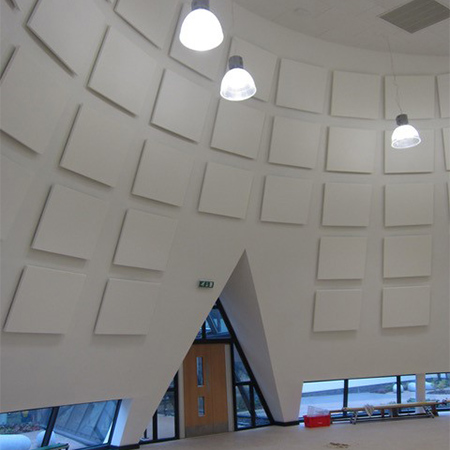
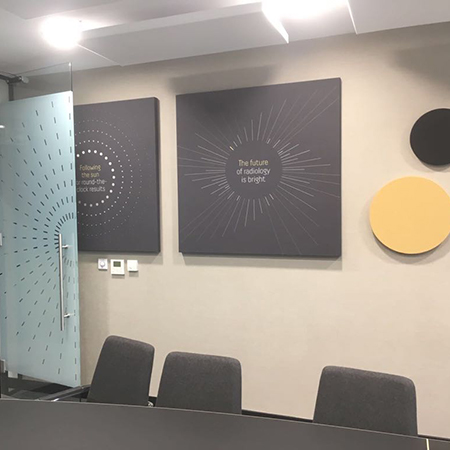
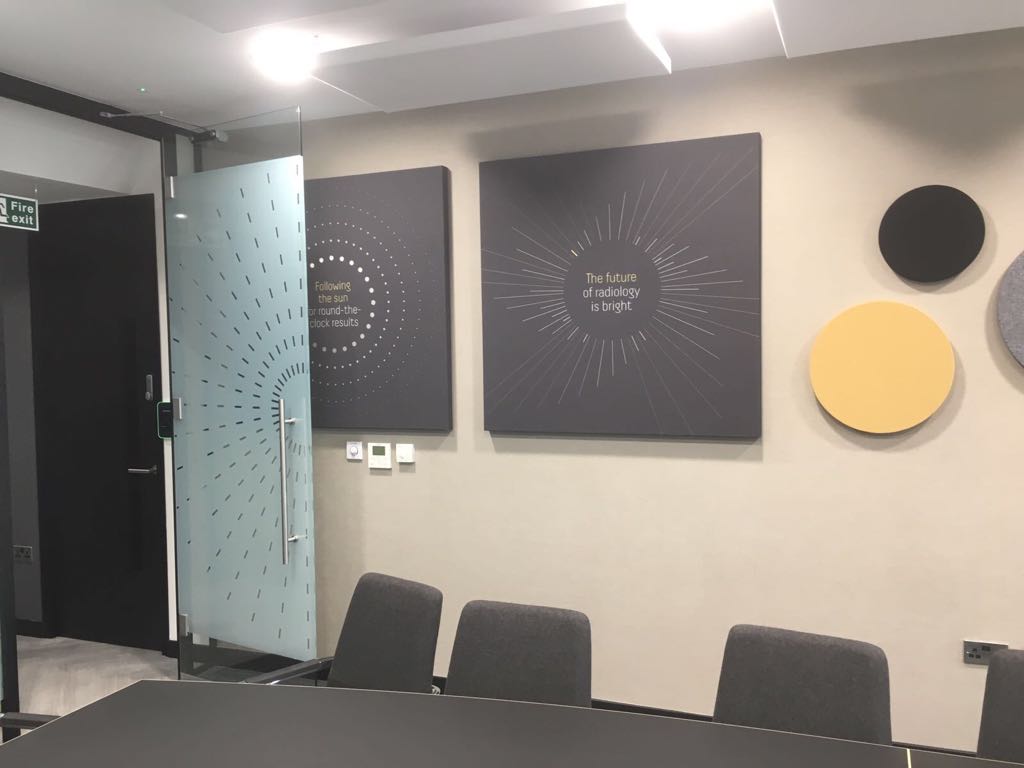
Reverberation can be addressed by installing Hush Absorber panels on the walls and ceiling to provide additional absorption for sound. Their specially formulated acoustic foam core combined with a fabric outer wrap is highly effective at reducing this noise issue, providing they offer the correct amount of absorbent surface area in the right locations within the room.
A final acoustic consideration that will apply to treatment rooms for uses such as physiotherapy or physical training is addressing the potential for noise to travel into adjacent rooms through vibration. Where a floor is likely to be subject to heavy impacts, such as through gym or workout routines and weights being dropped, it may need to incorporate Hush Acoustics’ bespoke anti-vibration measures into the floor and ceiling to add further sound absorption.
For advice on how to ensure your treatment or consultation room is optimised for client confidentiality and comfort, please contact the technical team at Hush Acoustics. Find out more at www.hushacoustics.co.uk.
Getting acoustics right in treatment rooms and consultation spaces
Image Gallery
Treatment rooms must have sufficient sound insulation and noise control measures to protect client confidentiality.

| T | 0151 933 2026 |
|---|---|
| E | info@hushacoustics.co.uk |
| W | Visit Hush Acoustics' website |
| Unit 2, Tinsley Industrial Estate, Shepcote Way, Sheffield, S9 1TH |
Products by this Company