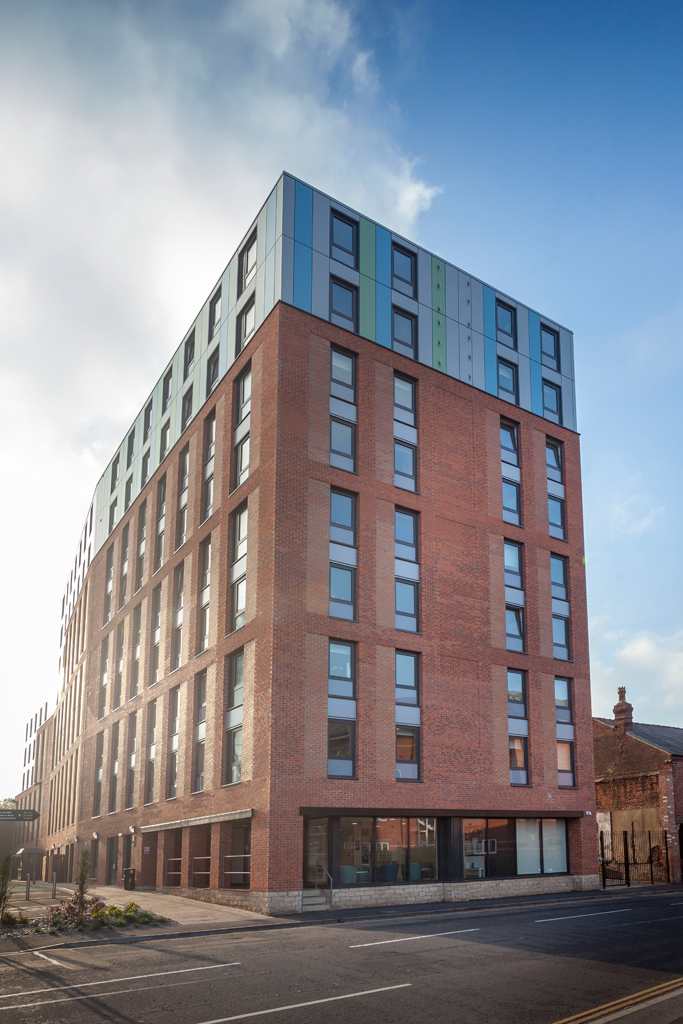
Acoustic comfort has become a critical aspect of building design, putting specifiers under greater pressure to deliver buildings which support wellbeing, productivity and occupant satisfaction.
The way we use buildings has evolved, with urban spaces more increasingly open, flexible and multifunctional. In today’s world, it isn’t uncommon for mid-rise living areas to serve as home offices, relaxation and entertainment spaces within the same day. At the same time, environmental noise is a growing challenge. Road traffic, rail networks and urban activity all contribute to rapidly growing levels of external noise, in densely populated cities.
Research by the WHO identifies environmental noise as the second largest environmental cause of health problems, degrading rest and metabolic health over time. The effects of noise exposure are also costly to the economy, leading to less productive working days, burdening healthcare systems and reducing the value of properties.
Against this backdrop, window specification has become an important topic of conversation. The challenge isn’t just to improve thermal comfort and reduce noise levels but to create an internal environment which supports modern patterns of working and living. Acoustic considerations must be integrated into the design process from an early stage, to deliver on a key specification priority.
Why Window Specification Matters
When it comes to sound transmission, windows are a vulnerable component within a building envelope. Even where walls, floors and roofs achieve high levels of acoustic performance, poor window specification can undermine the effectiveness of the overall façade.
Successful acoustic design relies on several factors which work together, including:
• The composition and thickness of glazing
• Frame design and its structural rigidity
• Overall airtightness
• Choice of hardware and locking systems
• Gasket and seal performance
• Quality of installation
• Strategy for ventilation (e.g. trickle vents)
Challenging the Triple-Glazing Assumption
A common misconception is that thicker glazing automatically delivers better acoustic performance, which is expressed using a Rw rating. The higher the Rw value, the greater the sound insulation performance.
Whilst increasing glass mass can reduce sound transmission, acoustic performance is far more complex than simply adding additional panes. Understanding the source of the noise and its frequencies which are being mitigated are crucial. Some correction factors include:
• C – relating primarily to medium and higher frequency sounds such as speech
• Ctr – relating to lower frequency sounds such as road traffic, aircraft and bass noise
In some situations, a carefully designed double-glazed unit incorporating acoustic laminated glass can outperform a standard triple-glazed construction.
This highlights that effective acoustic design requires a specification-led approach rather than simply selecting the highest number of panes.
The Importance of Airtightness
While glazing receives much of the attention, unwanted sound often enters a building through gaps and leakage points rather than directly through the glass itself.
Even small openings around window frames can significantly reduce overall acoustic performance. Proper sizing of the profile and glazing bead gasket directly influences the acoustic performance of the window. High-quality compression seals, robust frame construction and secure locking systems all contribute to creating an effective acoustic barrier.
For this reason, the entire window system should be considered rather than evaluating the glazing in isolation.
We offer a comprehensive range of glazing beads, including 24mm, 28mm, 36mm, 40mm and 44mm options. This flexibility allows specifiers to tailor glazing configurations to the specific requirements of each project, whether the priority is thermal efficiency, security or enhanced acoustic performance.
Balancing Acoustics and Ventilation
One of the biggest challenges facing modern building design is balancing acoustic performance with the need for natural ventilation.
Opening a window for fresh air can often negate much of the acoustic benefit delivered by the glazing specification. Yet access to natural ventilation remains important for occupant comfort, wellbeing and indoor air quality.
This is where Profile 22 Tilt and Turn Window systems can offer a practical solution.
The tilt function allows controlled background ventilation without fully opening the window, helping occupants maintain comfort levels while reducing the impact on internal acoustic conditions. This makes the design particularly suitable for apartments, education facilities, healthcare settings and other developments where both ventilation and noise control are key considerations.
An Integrated Solution for Modern Developments
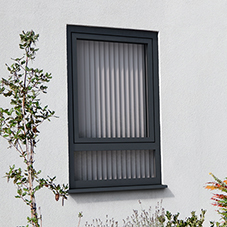
The Profile 22 Flush Tilt & Turn Window has been designed to combine aesthetics, functionality and performance within a single system. Its streamlined appearance, slim sightlines and high glass-to-frame ratio make it an attractive option for contemporary residential and commercial projects. Meanwhile, secure all-round locking, robust frame construction and high-quality sealing contribute to a strong and well-engineered building envelope.
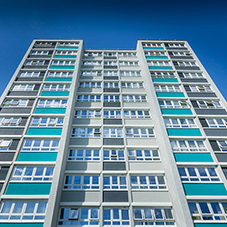
The system is particularly suited to mid-rise, exposed or difficult-to-access locations, while also providing the flexibility and ease of operation associated with tilt and turn designs. Profile 22 Tilt & Turn Windows also offer PAS 24 approval when correctly specified and can satisfy Secured by Design requirements where required.
From an acoustic perspective, Profile 22 Flush Tilt & Turn Window systems can achieve acoustic performances ranging from Rw 36dB to 44dB, depending on the glazing specification selected. This flexibility allows specifiers to tailor performance to the specific noise challenges of a project while maintaining aesthetic and operational requirements.
By accommodating a wide range of glazing specifications, the system provides a practical and cost-effective solution without compromising on performance.
Specifying for Occupant Wellbeing
As buildings are increasingly expected to support wellbeing, productivity and flexible living, acoustic comfort is becoming a defining measure of quality. For specifiers, this means looking beyond individual performance characteristics and considering how the entire building envelope contributes to the occupant experience.
Delivering effective sound insulation requires more than simply specifying thicker glass or opting for triple glazing. True acoustic performance depends on the interaction between glazing design, frame construction, airtightness, ventilation strategy and installation quality.
By adopting a whole-system approach, specifiers can balance acoustic comfort with other key requirements, including natural ventilation, security and aesthetics Profile 22 Flush Tilt & Turn Window systems demonstrate how these competing demands can be successfully combined, helping to create quieter, healthier and more comfortable environments that meet the expectations of modern developments.
How Window Specification Can Improve Acoustic Comfort in Modern Mid-Rise Buildings

| T | 0845 340 3968 |
|---|---|
| E | specifier@profile22.co.uk |
| W | Visit Profile 22's website |
| Stafford Park 6, Telford, Shropshire, TF3 3AT |
Products by this Company