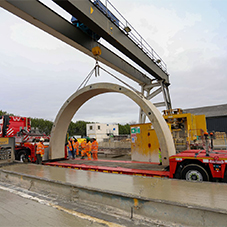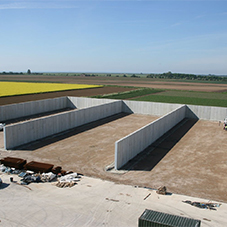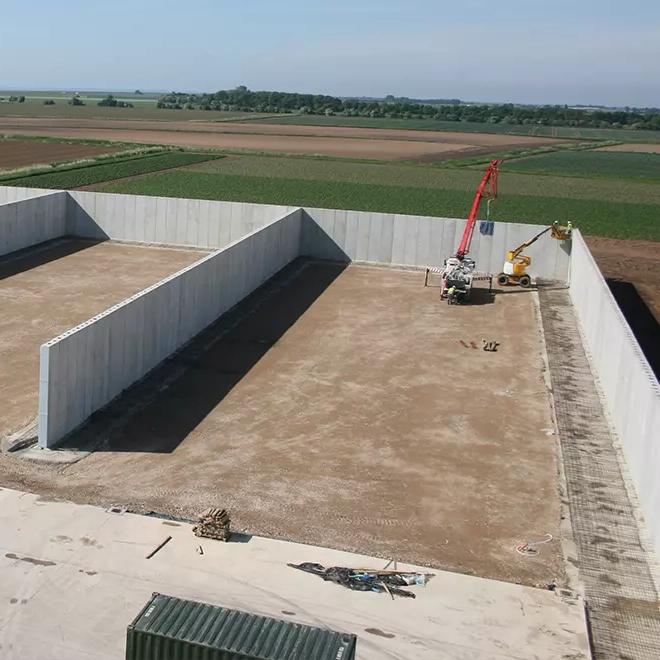
In waste and recycling facilities; retaining walls, such as those manufactured by Poundfield Precast, are not passive structures. They are working assets that form bays, push walls, fire breaks and material separators in environments defined by heavy plant, repeated impact and constantly changing loads.
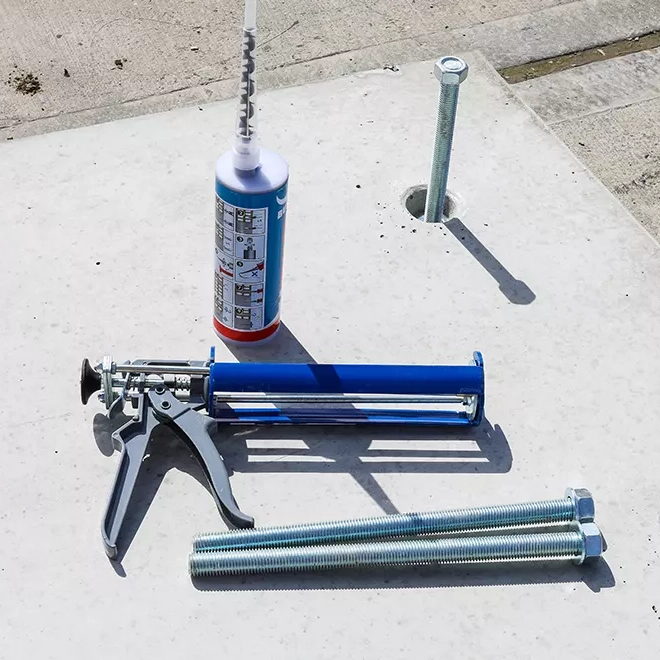
For these reasons, the way they are installed and restrained is just as important as the wall system itself. Across the industry, ground fixing retaining walls to a suitable slab or foundation is now widely recognised as best practice, as it directly addresses the real-world risks present on operational sites.
The operational reality of waste and recycling sites
Waste and recycling yards place exceptional demands on retaining walls. In these environments, relying solely on self-weight and friction introduces the potential for gradual movement. Even slight sliding or rotation can reduce bay efficiency, accelerate wear at the slab interface and – in the worst cases – create a safety risk for people and plant.
Waste industry guidance has increasingly focused on the risks associated with unrestrained containment walls in active yards. Best practice highlights that while some precast retaining wall units can be installed freestanding, ground fixing significantly reduces the risk of sliding or toppling due to impact loading and repeated operational use.
From a practical perspective, walls that are not ground fixed can move incrementally under repeated loading. This movement is often gradual and may go unnoticed at first, but over time it can lead to misalignment, uneven load distribution and increased maintenance requirements. Once movement occurs, corrective works are typically disruptive and costly.
As a result, ground fixing is now commonly treated as a standard control measure in high-activity zones, particularly where walls are exposed to frequent loader contact or high material pressures.
The benefits of ground fixing retaining walls
Ground fixing retaining walls deliver clear advantages in waste and recycling applications:
• Improved stability under impact and dynamic loading, as ground-fixed walls are far less likely to creep or rotate when subjected to repeated plant contact.
• Predictable long-term performance.
• Reduced operational and maintenance risk, with ground-fixing helping to protect both the retaining wall and the surrounding infrastructure.
• A stronger compliance position and improved health and safety.
Poundfield Precast’s retaining wall solutions for ground-fixed applications
Poundfield manufactures a range of precast concrete retaining wall systems which are used extensively across the waste and recycling sector. While each system has its own strengths, all can be specified with stability, durability and operational safety in mind when ground fixing is incorporated into the design.
Shuttabloc™ – high-duty containment for severe loading
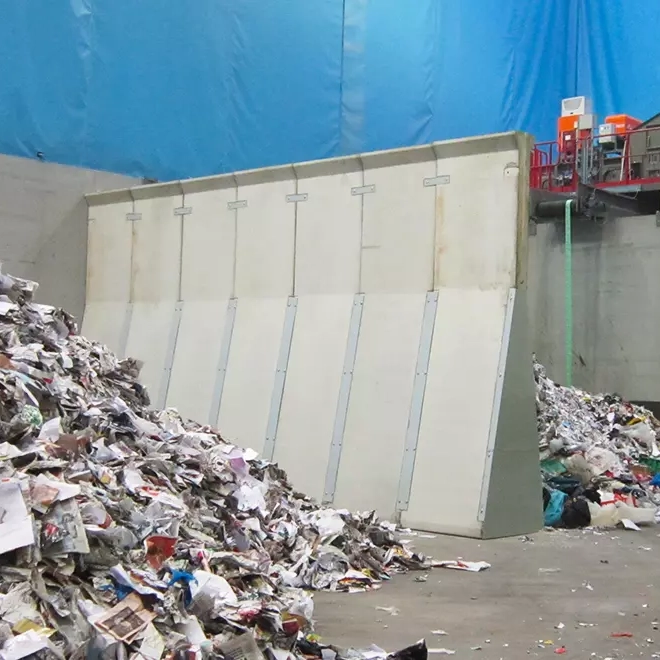
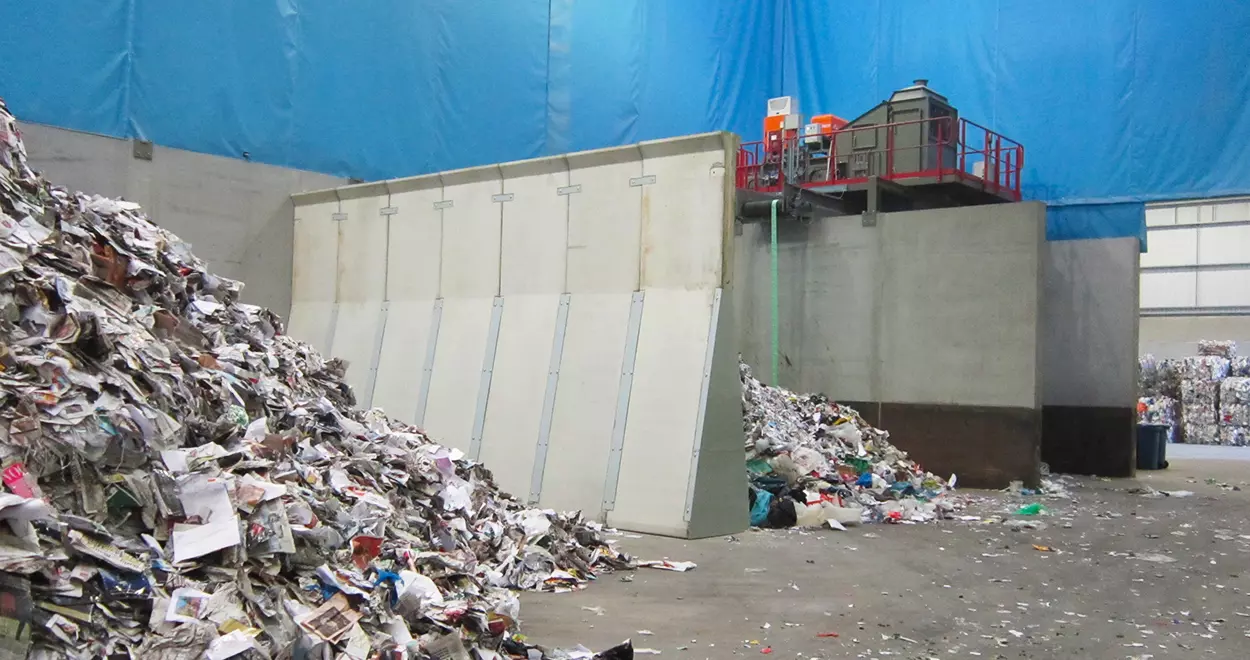
Shuttabloc is Poundfield’s heavy-duty retaining wall system designed for environments where walls are exposed to high loads, frequent impact and aggressive operational use. It is particularly well-suited to push walls and high-capacity bays where loaders are regularly compacting or pushing material.
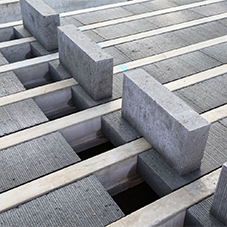
Once installed, Shuttabloc units are pumped full of concrete, forming a solid, reinforced structure that behaves much like an in-situ wall but without the need for traditional formwork. This makes it ideal for sites that demand strength, durability and long-term stability.
In waste and recycling environments, Shuttabloc is often used where ground fixing and structural integration with the slab are expected from the outset. The system supports engineered solutions where the wall and floor work together to resist sliding, overturning and impact forces.
Typical applications:
• Push walls subjected to regular loader impact
• High bays retaining dense or heavy materials
• Sites seeking in-situ performance with precast speed and quality
Alfabloc® – flexibility with the option to ground fix
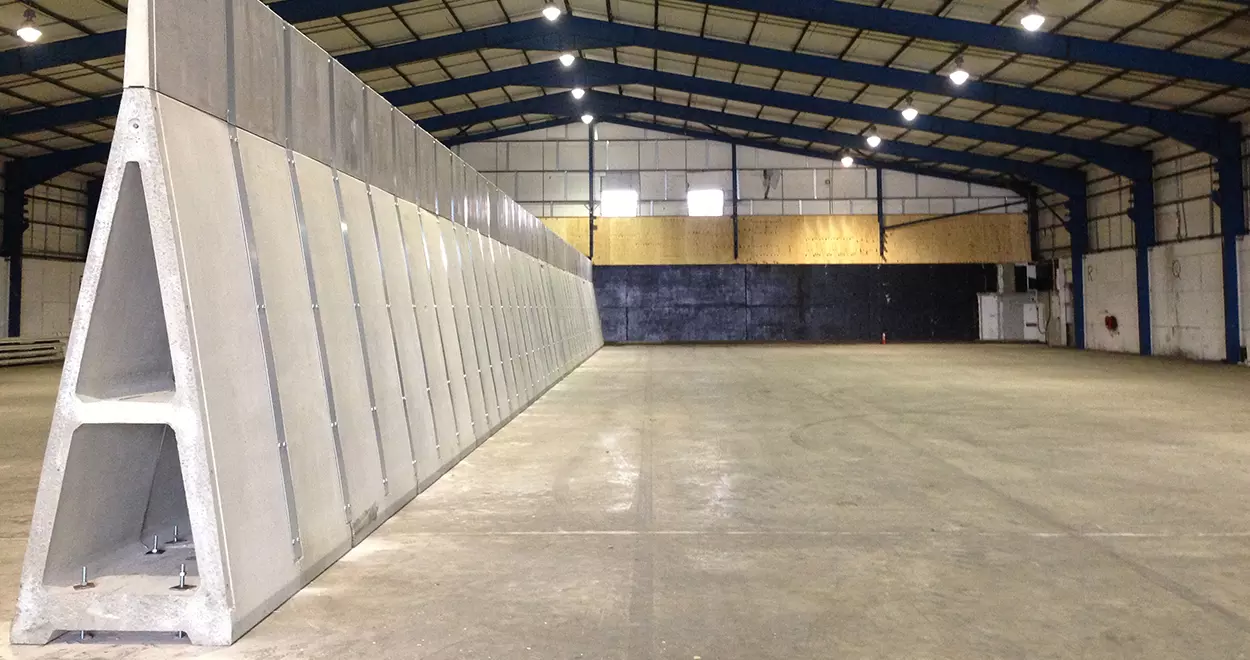
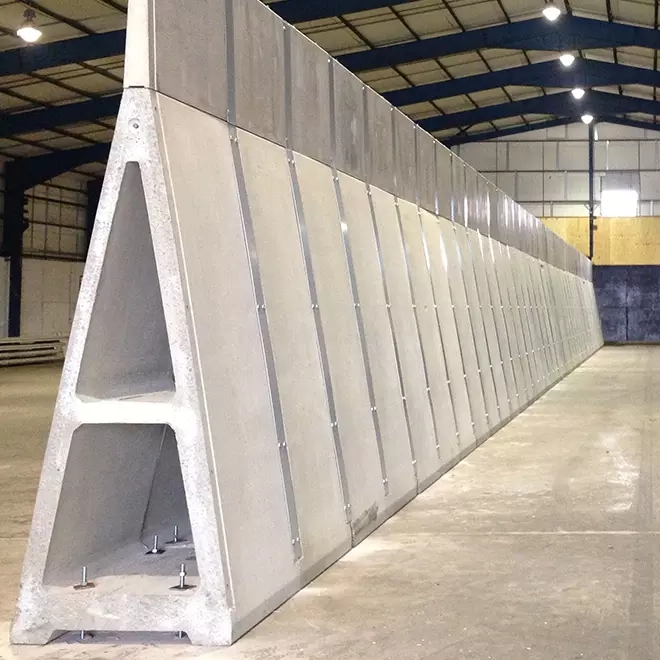
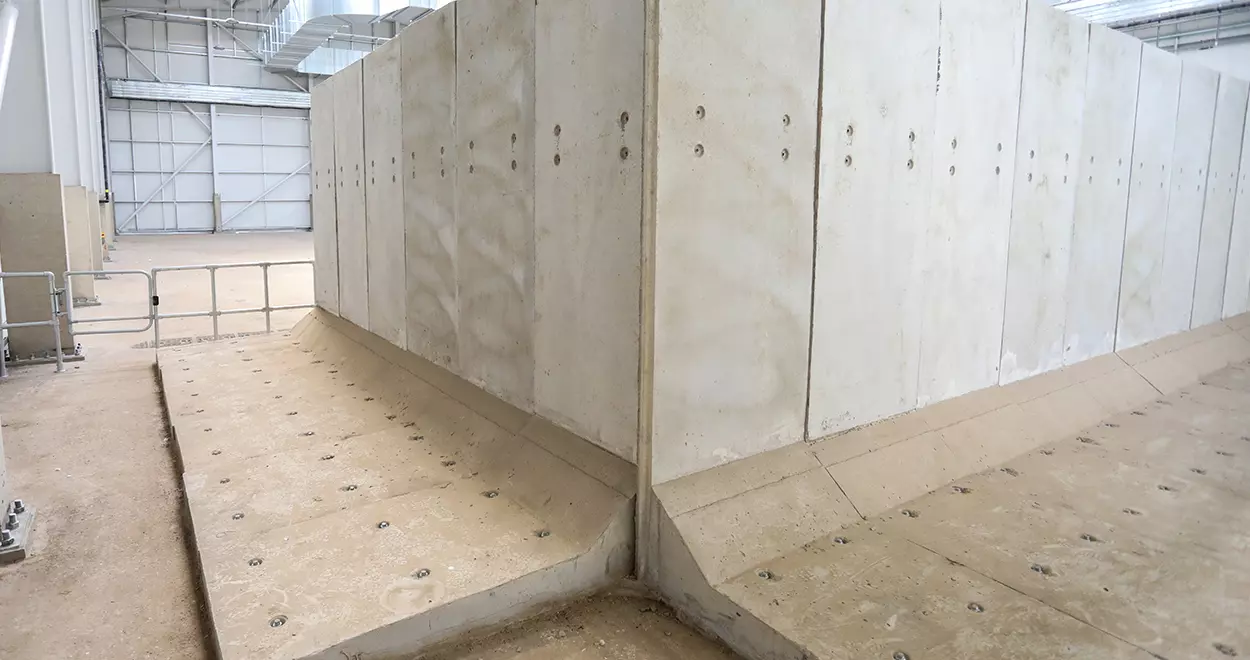
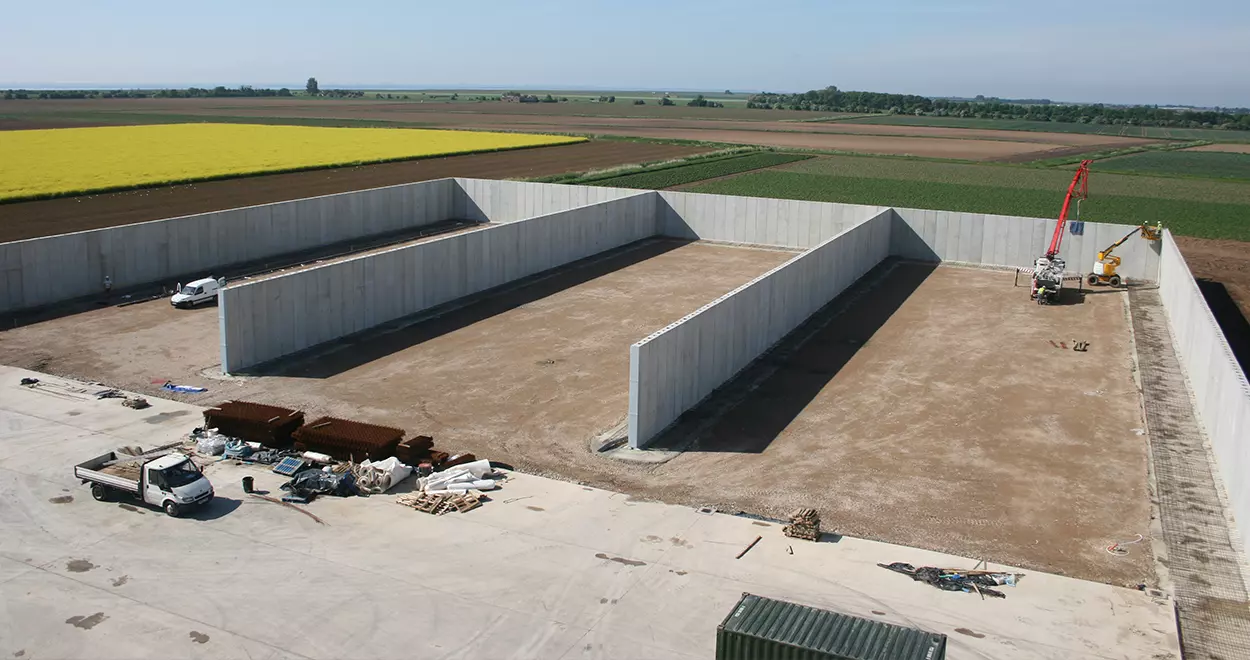
Operational flexibility is a key requirement for many waste and recycling sites. Alfabloc provides a highly adaptable ‘A’ shaped interlocking system that can be loaded on one or both sides and reconfigured as operational needs change. Its ‘A’ shape provides a seamless transition from wall to floor, making waste bays easier to empty, as well as reducing the potential for damage to the wall from loading equipment, due to the absence of a protruding toe.
While Alfabloc is often used as a freestanding solution, it can also be ground fixed where required. This makes it particularly useful on sites where some areas demand full flexibility, while others present a higher risk due to traffic levels or loading intensity.
By introducing ground fixing in selected locations, operators can balance adaptability with enhanced stability, without committing the entire site to a fully fixed layout.
Typical applications:
• Dividing walls and bays requiring reconfiguration
• Temporary or semi-permanent storage areas
• Sites combining flexible layouts with ground-fixed high-risk zones
L-Bloc® – efficient L-shaped walls for bulk separation
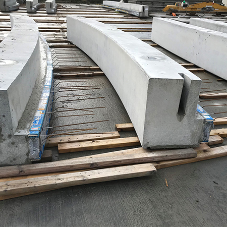
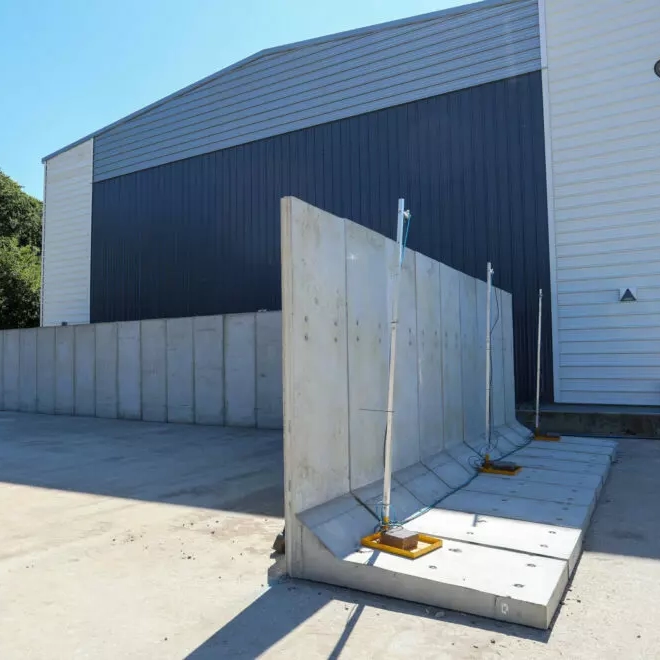
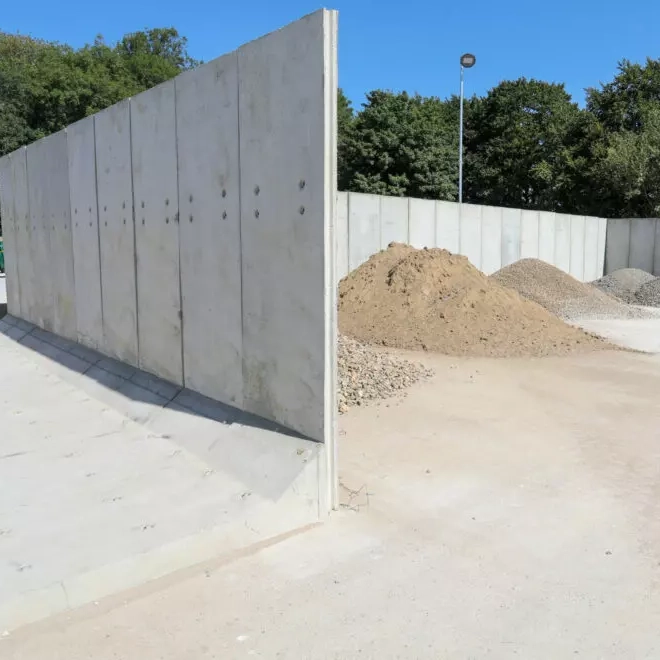
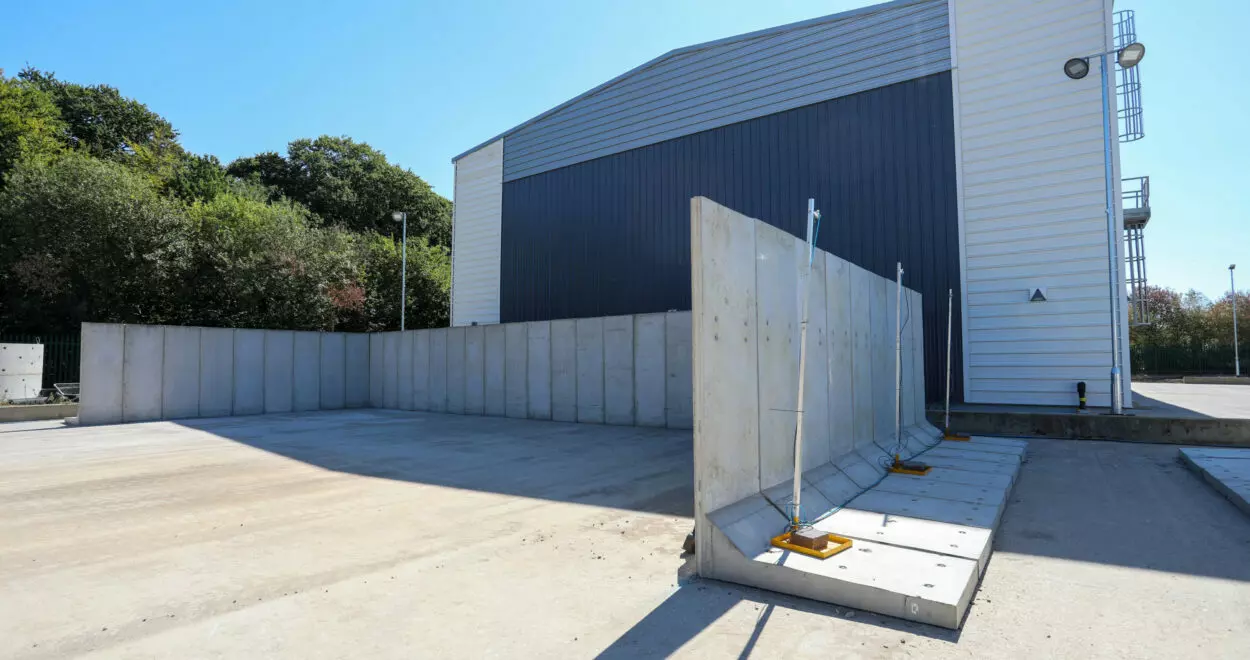
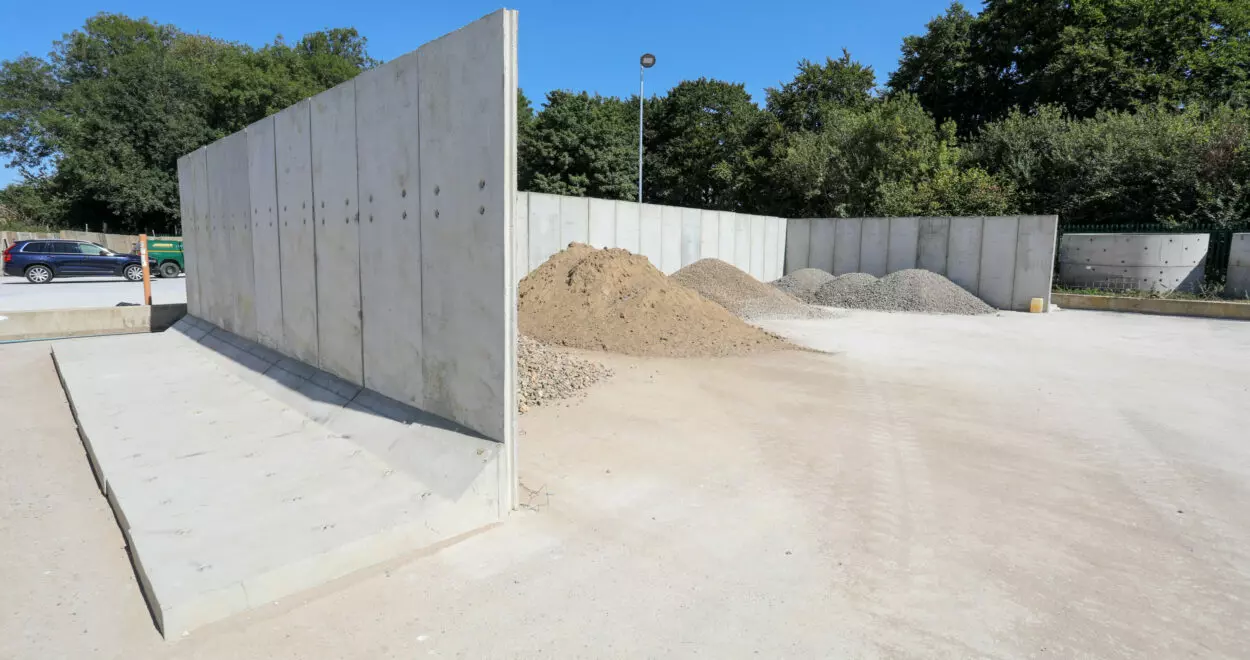
Poundfield’s L-Bloc system is a prestressed, interlocking L-shaped retaining wall designed for efficient bulk storage and separation. The unique tongue-and-groove joint ensures strong alignment between units, creating a robust and continuous retaining structure.
With L-shaped retaining walls, part of the base – commonly referred to as the foot or heel – typically projects out in front of the wall. In busy waste and recycling environments, this exposed section can be vulnerable to damage from loading shovels, telehandlers and other plant operating close to the wall.
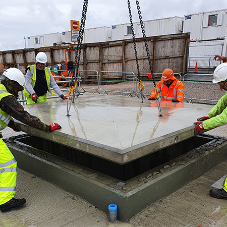
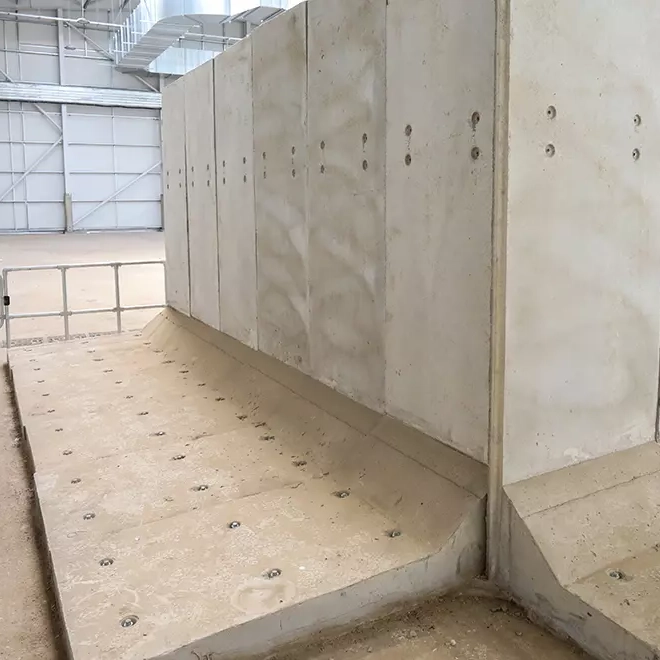
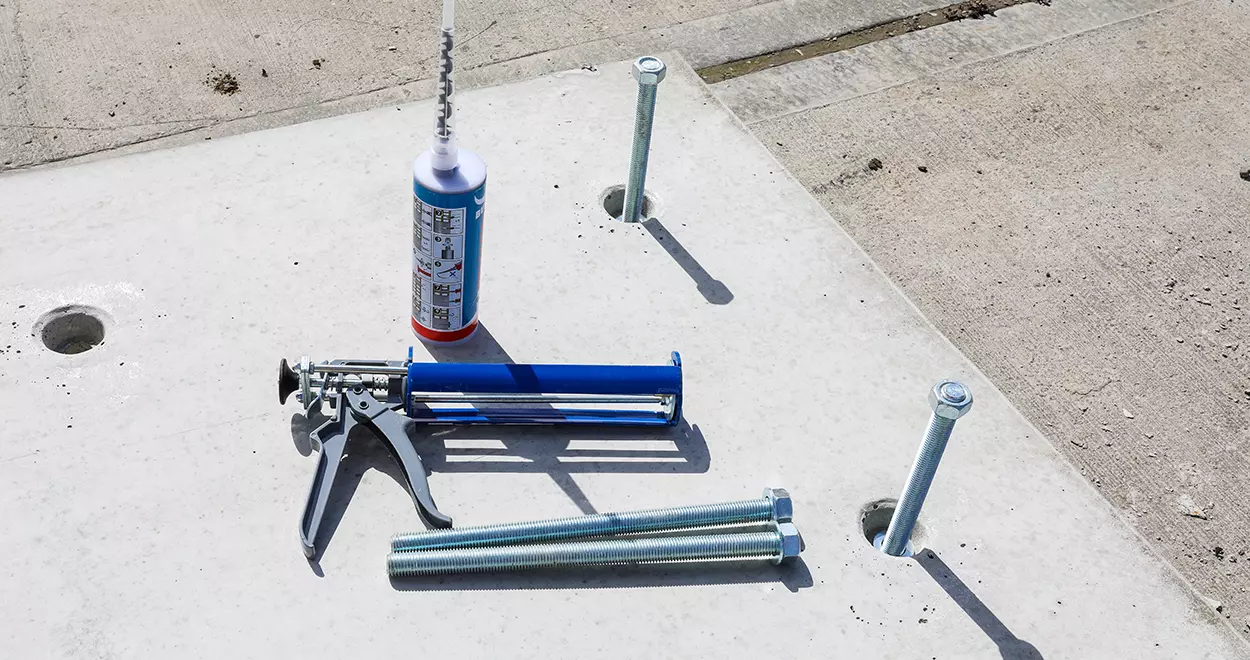
A practical solution is to set the base of the L-Bloc into the slab or floor during installation. By recessing the foot into the concrete foundation and then casting or finishing the floor slab around it, the base of the unit becomes integrated into the floor construction. The heel can still be ground fixed using bolts into the slab as well to provide a solid solution.
This approach offers several advantages. The surrounding concrete provides additional anchorage, helping to improve the stability of the wall and resist movement under operational loading. At the same time, the projecting foot can be brought level with the finished floor surface, eliminating the exposed edge that could otherwise be struck by machinery.
The result is a cleaner, uninterrupted working surface for plant operators, reducing the risk of impact damage while also improving the overall restraint of the retaining wall within the slab.
In waste and recycling environments, this installation method makes the L-Bloc system particularly practical. It improves loader manoeuvrability, reduces ground-level obstructions and maximises usable bay width. L-Blocs can therefore be recessed into the ground and ground fixed to provide both operational efficiency and enhanced stability.
Typical applications
• Bulk material separation
• Two-sided loading environments
• Sites prioritising clean bay layouts and efficient use of space
Design considerations for ground-fixed retaining walls
Ground fixing should always be considered as part of a wider structural solution. The slab or foundation plays a critical role in the performance of a ground-fixed retaining wall system.
When specifying ground-fixed retaining walls for waste and recycling facilities, Poundfield recommend careful consideration of:
• Expected material densities, bay heights and surcharge loads
Frequency and nature of plant impact
Slab thickness, reinforcement and local strengthening at fixing points
• Fixing specification, durability and inspection access
Long-term maintenance and wear protection at the wall base
Addressing these factors early helps ensure the retaining wall, fixings and slab operate together as a single, robust system.
A clear, practical solution
In the waste and recycling industry, ground fixing retaining walls is no longer viewed as excessive or optional, but instead is a practical response to the realities of heavy plant, variable loading and long-term operational wear.
While not every wall needs to be ground fixed in every location, positive restraint is increasingly the default expectation in active yards. It improves stability, reduces risk and protects both people and infrastructure.
With systems such as Shuttabloc, Alfabloc and L-Bloc, Poundfield Precast offers retaining wall solutions that can be designed and installed with confidence to meet modern waste and recycling demands.
For more information about any of Poundfield Precast’s retaining wall products and the benefits they bring, visit poundfield.com, call 01449 723 150 or email enquiries@poundfield.com
The benefits of ground fixing retaining walls in waste and recycling
| T | (01449) 723150 |
|---|---|
| E | enquiries@poundfield.com |
| W | Visit Poundfield Precast's website |
| The Grove, Creeting St Peter, Ipswich, IP6 8QG |
Products by this Company