
With the growing trend towards multi-occupancy buildings, David Corner, Product Support Manager at RWC, explores how effective plumbing specification delivers performance and efficiency.
Visit almost any city in the UK, and you’ll see the rapid growth of multi-occupancy buildings, including high-rise apartment blocks through to purpose-built student accommodation.
These buildings are reshaping not only skylines, but also the demands placed on building services, where higher occupancy, shared infrastructure and system interdependence require a more considered approach to plumbing and heating design.
In multi-occupancy buildings, plumbing and heating systems are not only essential for occupant comfort, but also for safety, compliance and wider sustainability goals.
Delivering on all these fronts requires more than straightforward product specification. Instead, specifiers must adopt a whole-building approach to specification, beginning in the plant room, rising through distribution networks and culminating in individual dwellings.
Strong foundations are built in the plant room
The plant room is the operational centre of any multi-occupancy plumbing and heating system, housing essential equipment such as boilers, expansion vessels and water treatment. This space is the beating heart of the infrastructure that allows the complete building to operate efficiently and reliably.
As the point where mains water supply typically enters the building system, where it can fluctuate significantly, the plant room must be equipped to safely manage water pressure from the outset. Specifiers must ensure the correct solutions are in place to manage this pressure and ensure sufficient supply around the whole building. Here, Pressure Reducing Valves are key, offering vital protection for critical equipment by managing excess pressure at the point of entry.
Large-scale systems, which are essential for multi-occupancy buildings, create further complexities in areas such as thermal expansion. As water is heated, it expands, requiring appropriate control measures to prevent overpressure and long-term stress on the system. Expansion Vessels regulate these pressure fluctuations, ultimately protecting pipework and valves within the system.
When designing plant rooms, specifiers also need to consider backflow prevention. The larger the system, the greater the potential for contamination, making the inclusion of Reduced Pressure Zone Valves essential within the plant room. These safeguard the mains supply from contamination by preventing water from flowing back into the public network.
Just as important as the initial specification, the plant room must be designed with long-term serviceability in mind. To support reliable functionality, these valves need to be routinely maintained, so ensuring they’re accessible will support ongoing performance and compliance.
Vertical distribution: Designing risers for reliability and control
From a well-designed plant room, utilities must travel efficiently throughout the building to individual apartments. Risers play a critical role here, ensuring water and heating reach each dwelling reliably.
In modern buildings, however, space is at a premium, so risers must remain compact, all while delivering dependable performance.
Effective sizing and configuration are therefore key and rely on a comprehensive understanding of anticipated demand. Specifiers must consider the number of dwellings, occupancy patterns and even the volume of outlets across kitchens, bathrooms and utility areas – all of which will help to determine the flow rates required.
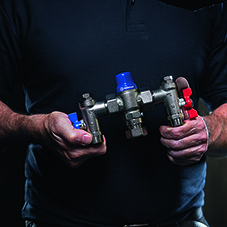
To deliver this while keeping space to a minimum, compact solutions are increasingly important. Combination valves, such as the Tenant Valve Compact by Reliance Valves, bring multiple functions into a single unit – engineered to reduce potential leak points, speed up and simplify installations, and save space.
As with the plant room, serviceability remains critical within the risers. The ability to isolate services on each level supports maintenance without disrupting services across the building.
Delivering performance for every dwelling
It would be easy to focus solely on this stage when specifying plumbing and heating for multi-occupancy buildings, but well-planned plant rooms and risers strengthen and simplify specification at this level.
Occupants expect stable pressure, reliable hot water and safe systems. Specifiers must ensure this is achievable, without compromising performance across other dwellings, even when demand across the building is high.
The installation of single and double check valves helps safeguard against contamination within individual homes, maintaining system integrity.
Leak detection solutions such as the Reliance Valves MultiSafe Leak Detector Control Valve continuously monitor water consumption and alert residents or building managers to unusual usage patterns or leakage, strengthening overall system resilience.
Of course, within each home, the focus is also on ensuring individual safety. Thermostatic Mixing Valves can be installed ahead of each outlet to blend hot and cold water to ensure consistent, safe temperatures. In some applications, including ahead of baths, these valves are a legal requirement, but broader usage can strengthen safety.
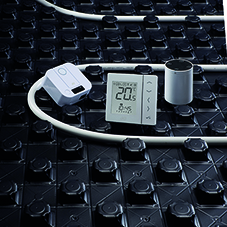
Underfloor heating (UFH) can also support performance for each dwelling, delivering consistent, comfortable and controllable heat distribution across whole floor spaces. By operating at lower temperatures than radiators, and with the benefit of zone control, UFH can improve overall system efficiency while allowing residents to tailor heating to individual rooms and usage patterns via smart controls.
Unlocking long-term performance with a whole-building approach
The specification of plumbing and heating systems is a complex task, and one which demands a whole-building perspective to achieve the best results.
While the spotlight will often fall on individual dwellings and occupant comfort, specifying for success requires equal consideration in the plant room and risers. Getting these elements right lays the foundations for reliable, long-term performance.
By approaching plumbing and heating system design in multi-occupancy buildings as a whole, interconnected project, specifiers can deliver systems that operate safely, reliably and efficiently over time. Achieving this depends not only on quality components, but on how these are integrated and maintained.
Reliance Valves, JG Speedfit and JG Underfloor, all part of the RWC family of brands, manufacture market-leading plumbing and heating solutions that support specifiers at every stage – from plant room to point of use.
In RWC's brand-new eGuide, they explore each of these core stages in more detail, providing a practical guide to specifying multi-occupancy plumbing and heating systems.
Download your free copy here: https://www.reliancevalves.com/gb/en/resources/e-guides/mo-guide
Adopting a whole-building approach to multi-occupancy plumbing and heating
 (002)-comp104848.png "RWC – Reliance Worldwide Corporation")
| T | (01895) 425333 |
|---|---|
| E | Info@RWC.com |
| W | Visit RWC – Reliance Worldwide Corporation's website |
| Horton Road, West Drayton, Middlesex, UB7 8JL |