Water efficiency in commercial buildings is not a simple exercise. With inconsistent water usage throughout the year, due to factors such as seasonality and varied occupancy rates causing demand patterns to fluctuate.
While commercial water systems are typically designed to meet peak demand requirements, these periods of both high and low water usage can expose weak points in the system, particularly around pressure stability and flow management. If fluctuations are not considered during system design, it can lead to inconsistent performance, inefficient water use and potential water safety risks.
To accommodate these variations in demand, specifiers should consider several water efficiency requirements from the outset, including:
● Hotels may face seasonal occupancy demand changes as well as daily morning and evening usage peaks that can place additional strain on plumbing systems, potentially resulting in pressure drops on upper floors and in remote areas of the building.
● Leisure and sports facilities often see short but intense periods of demand. Showers, changing rooms and washroom facilities can create rapid load changes, requiring systems to maintain stable pressure and temperature control even under fluctuating conditions.
● Educational buildings face a different challenge. Extended periods of low occupancy during summer breaks can increase the risk of water stagnation in hot water systems and dead legs, while recommissioning after shutdown periods can introduce further operational concerns, including delivering consistent water quality.
● Commercial offices can experience irregular usage patterns due to hybrid working arrangements. Partial occupancy and demand that varies floor-by-floor can create some inconsistencies in how a system performs if pressure and flow are not properly monitored.
Understanding where seasonal demand becomes a design issue is therefore an essential part of the specification stage, if improved water efficiency and long-term system reliability are to be ensured.
Managing pressure stability
Seasonal fluctuations in water demand can place significant strain on the water efficiency of commercial buildings. During periods of low demand, higher network pressures can lead to pressure spikes, while peak usage periods can result in pressure drops that affect system performance. If these variations aren’t considered during the design stage, they can cause inconsistent outlet performance, increased wear on components, inefficient water use, and dissatisfaction among occupants.
This makes specifying pressure management measures crucial from the outset, as doing so will help to maintain stable performance throughout the year, regardless of changing demand levels. Pressure Reducing Valves (PRVs) play a critical role in achieving this.
By maintaining a consistent downstream pressure, PRVs can help to ensure reliable outlet performance, contributing directly to water efficiency and reduced stress on components, and should be viewed as a core element of any well-designed commercial water system, rather than an optional addition.
When it comes to multi-storey buildings, another element that can help to ensure consistent system performance is pressure zoning. Different areas within a building can have varying pressure requirements, especially where there are significant height differences, such as between upper and lower floors. Dividing the system into pressure zones allows each area to operate within its optimal pressure range, preventing excessive pressure on lower floors while maintaining adequate flow to upper levels. Zoning also helps to protect sensitive equipment and appliances from pressure fluctuations that could compromise performance or reduce service life.
By combining effective pressure management with well-planned zoning, commercial water systems can remain efficient, reliable and resilient throughout demand changes.
Temperature control, safety and seasonal shutdowns
Alongside pressure management, temperature control is an important consideration when designing water efficient commercial buildings. Buildings such as schools and hotels and some may operate at a reduced capacity or close entirely over certain periods of the year, which increases the risk of stagnated water in the system.
Extended periods of low water usage can contribute to temperature stratification, making it more difficult to maintain safe water temperatures throughout the network. As a result, specifiers should consider not only how systems will perform during normal operation, but also how they will operate during low-occupancy periods and how they can be safely recommissioned following an extended shutdown. This is particularly important in sectors such as healthcare, education and hospitality, where water safety standards are essential.
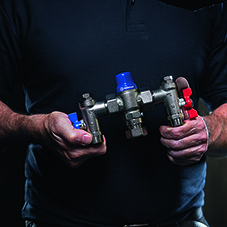
Thermostatic Mixing Valves (TMVs) are a key component in maintaining safe and consistent outlet temperatures under fluctuating demand conditions. Installed close to outlets, TMVs blend hot and cold water, helping to ensure water is delivered at safe temperatures while protecting users from the risk of scalding. Since 2010, TMVs have been a requirement in many new-build applications where safe outlet temperatures are specified, making them a fundamental part of modern commercial water system design.
For specifiers, the correct specification of TMVs can help ensure compliance, improve occupant safety and maintain consistent performance regardless of changing seasonal conditions.
Designing for resilience
While commercial water systems are often designed around peak or average demand, the reality is that they must perform reliably under a wide range of operating conditions throughout the year.
Seasonal fluctuations in occupancy can significantly affect pressure, flow and temperature, making it essential to consider both high-demand and low-usage scenarios during the specification process. By incorporating appropriate pressure management, temperature control and zoning strategies from the outset, specifiers can help ensure systems remain safe, efficient and compliant, regardless of changing demand patterns.
The decisions made at the specification stage have a lasting impact on the operational performance, safety and longevity of a commercial building’s water system. And by addressing seasonal demand as part of the initial design process, specifiers can help to create more resilient systems that are better equipped to meet the needs of both the building operators and the occupants throughout the year.
John Guest’s Reliance range supports water efficiency in commercial buildings with pressure, temperature and flow control solutions designed to help maintain safe, efficient and reliable performance across a wide range of applications.
Explore their commercial water control solutions, visit: www.johnguest.com/gb/en/sectors
How seasonal demand affects pressure, flow and water efficiency in commercial buildings
 (002)-comp104848.png "RWC – Reliance Worldwide Corporation")
| T | (01895) 425333 |
|---|---|
| E | Info@RWC.com |
| W | Visit RWC – Reliance Worldwide Corporation's website |
| Horton Road, West Drayton, Middlesex, UB7 8JL |
Categories
Underfloor heating Valves Water-supply pipes