The importance of limiting global warming to no more than 1.5ºC above pre-industrial levels has been well documented over recent years, with every business, organisation and individual having a part to play in cutting carbon emissions.
As a major precast concrete manufacturer, Poundfield Precast has long-recognised the contribution it can make to help its customers lower their carbon footprint. As a result, every product manufactured by Poundfield can now be supplied in an ultra-low carbon option marketed under the name of Greenbloc, while cement-free concrete is also available.
By offering these choices, Poundfield is providing the construction industry with real commercial solutions to reduce embodied CO2 used in precast products.
Cutting carbon at Gallows Corner
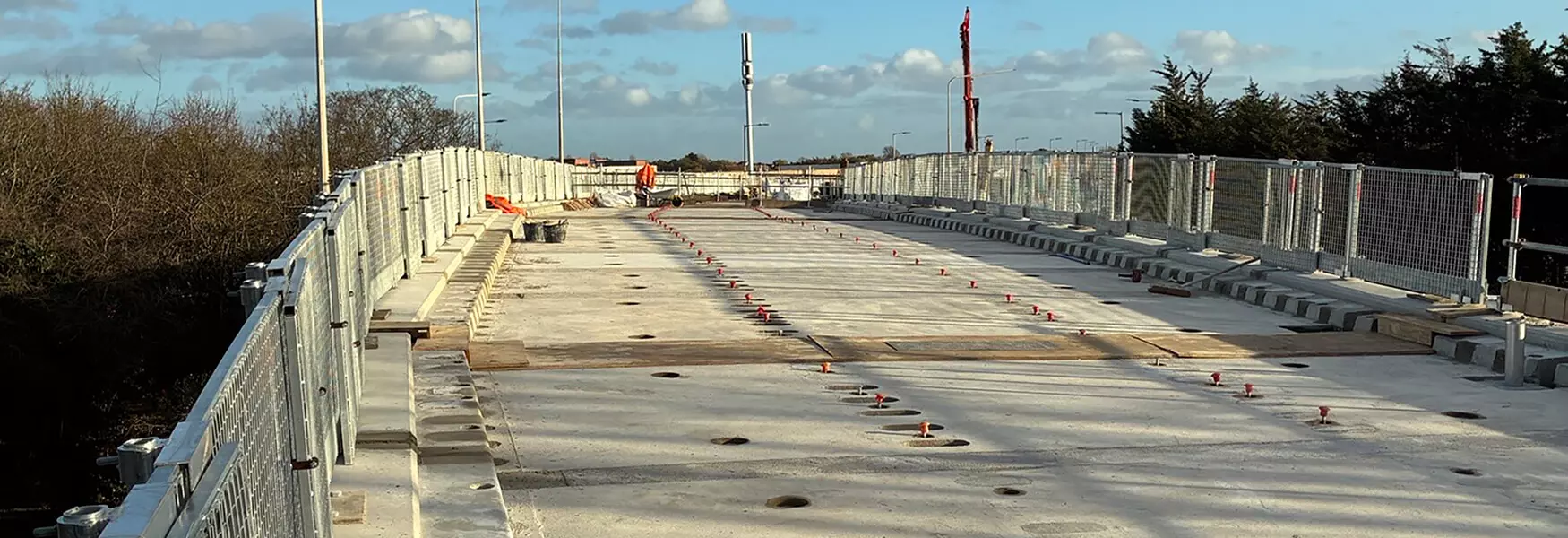
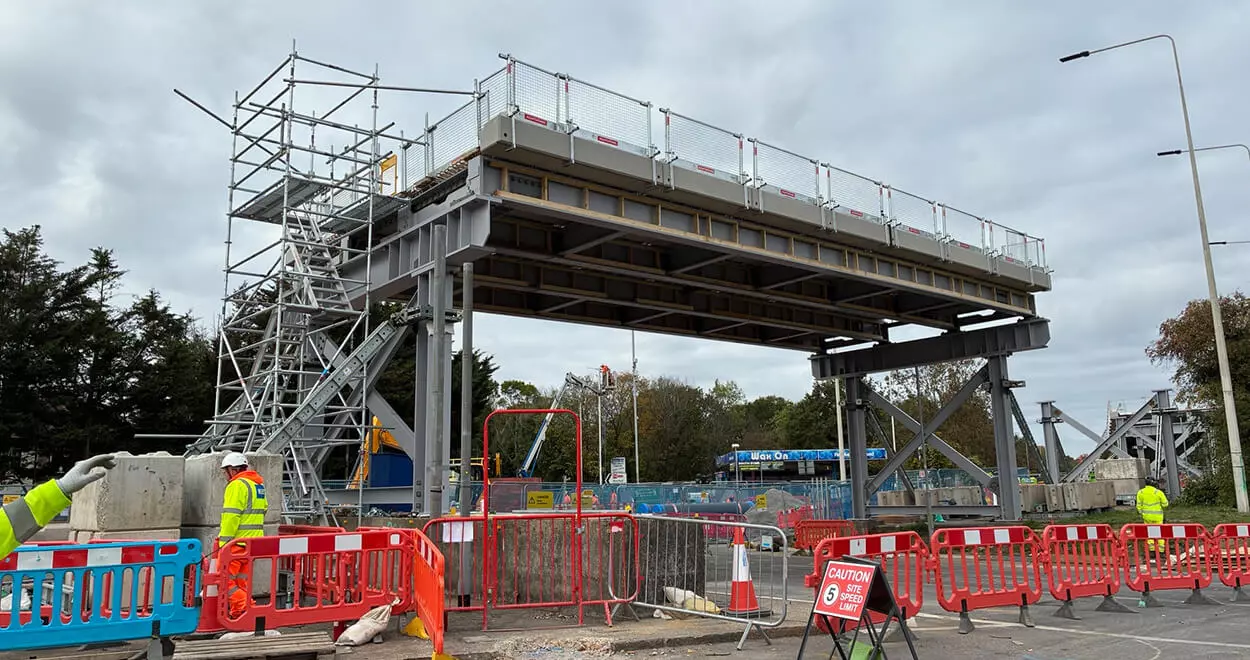
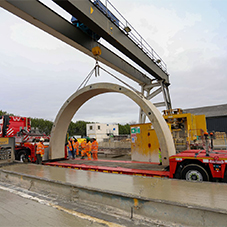
A recent major infrastructure scheme to benefit from Poundfield’s reduced carbon concrete products was a major rebuild of the Gallows Corner flyover in Romford, East London.
Originally built as a temporary structure in the 1970s, the interchange was in urgent need of renewal. As it plays a strategically important role in keeping the country moving by linking the A127 with the A12 and enabling access to the M25, completing the complex project efficiently while ensuring its longevity would be key.
Transport for London commissioned Costain as its main contractor to renew and replace every element of the complex structure except its foundations. Once complete, all speed and weight restrictions would be removed from the strengthened flyover, in turn improving journey times, reliability and safety for road users. New pedestrian and cycle crossings would also be included to make walking and cycling safer. Part-funded by the Department for Transport and the Mayor of London, the project involved close partnership working between commissioners, contractors and suppliers.
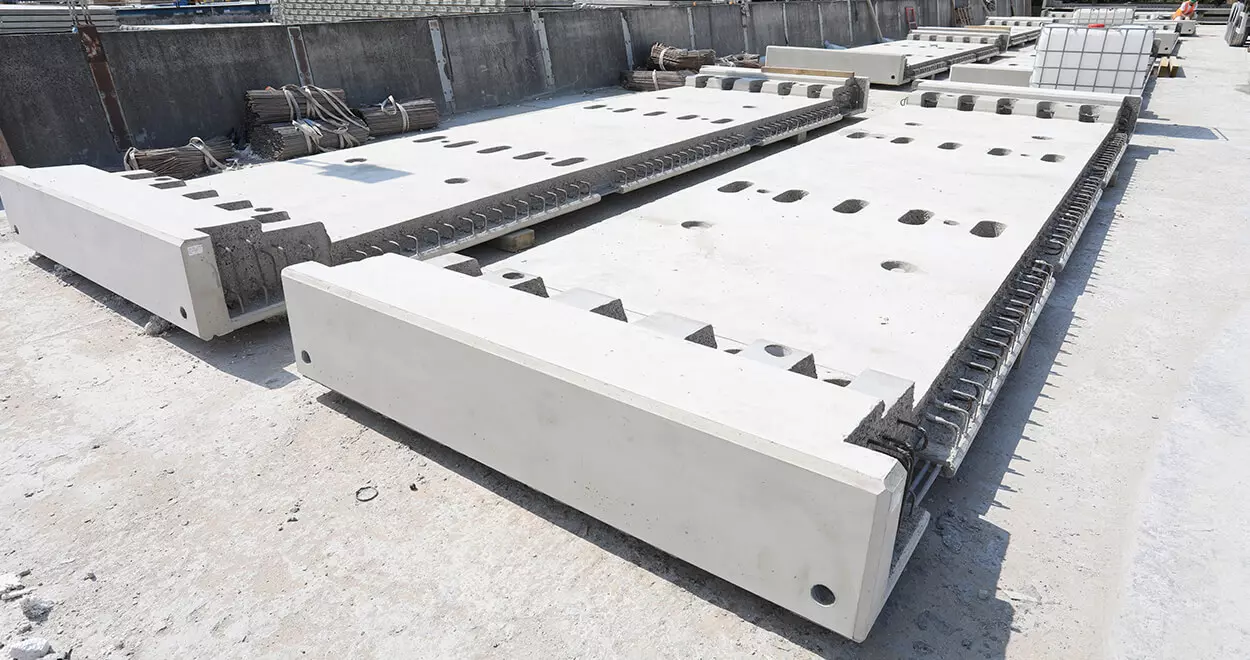
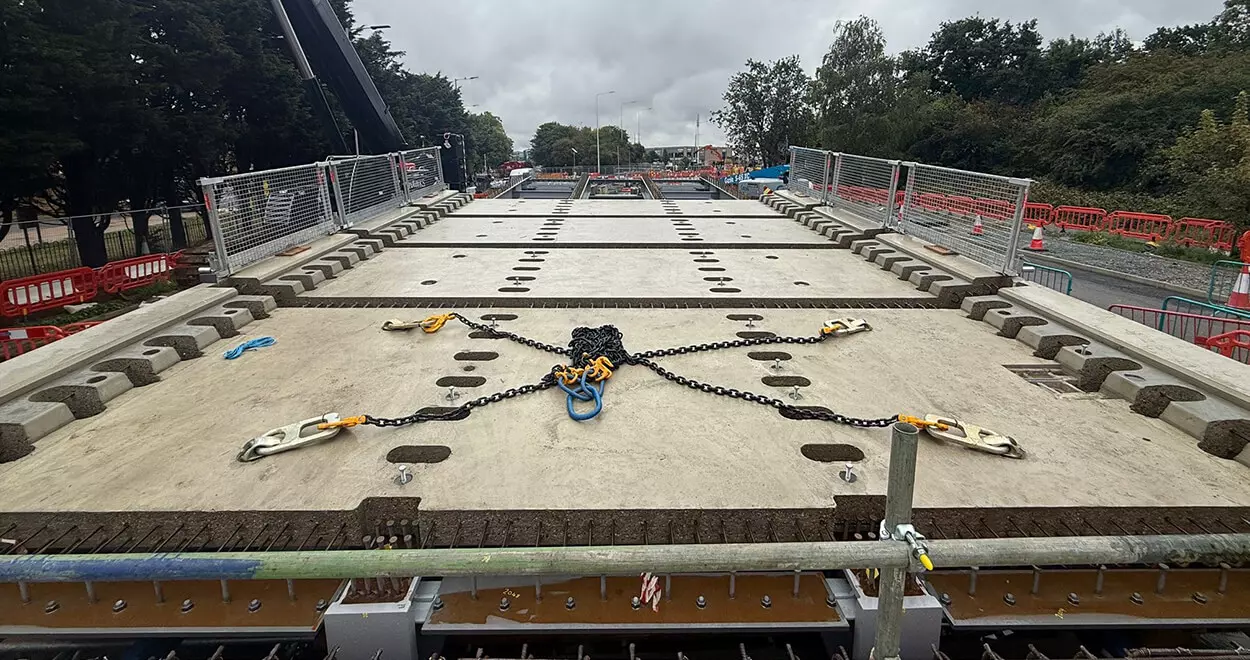
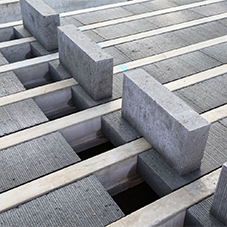
To support its successful delivery, Poundfield was contracted to produce reduced carbon precast concrete decks which would help ensure the strength and integrity of the new structure for decades to come.
Protecting the environment while keeping traffic moving
Costain was tasked with designing and delivering the project with a reduced carbon footprint to align with Transport for London’s environment and climate ambitions. In addition, keeping the busy route open for as long as possible to minimise disruption for Londoners was also a key consideration.
As a result, Costain commissioned its suppliers – including Poundfield – to fabricate as much of the new structure off-site as possible before transporting it to Romford for assembly. In addition, suppliers were also challenged with reducing the use of carbon-intensive materials during manufacture to minimise the project’s environmental impact.
Poundfield Precast’s role
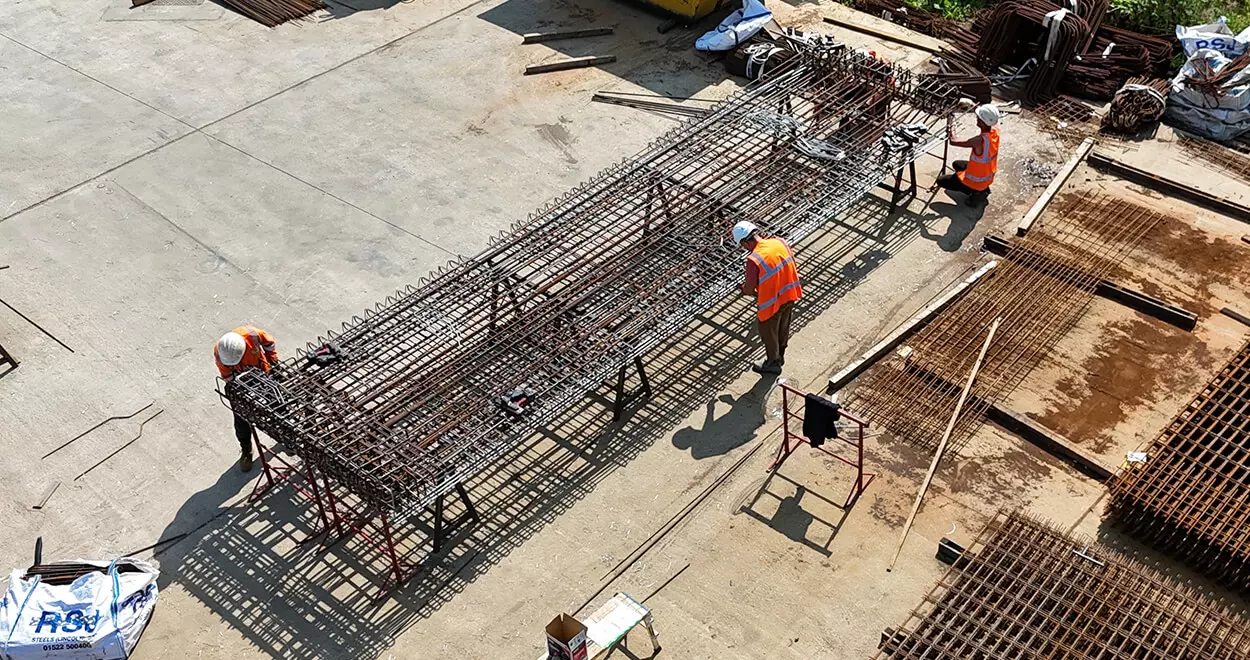
During the design phase, Costain used Transport for London’s carbon assessment tool, CAT, to identify the precast decks Poundfield were to supply as a potential carbon hotspot. To address this, both companies worked closely together to find a greener solution which would not impact on quality or durability. As a result, the slabs were cast using a low-carbon mix in which 50% of the cement was replaced with ground granulated blast-furnace slag, a sustainable byproduct of blast furnaces used to make iron.
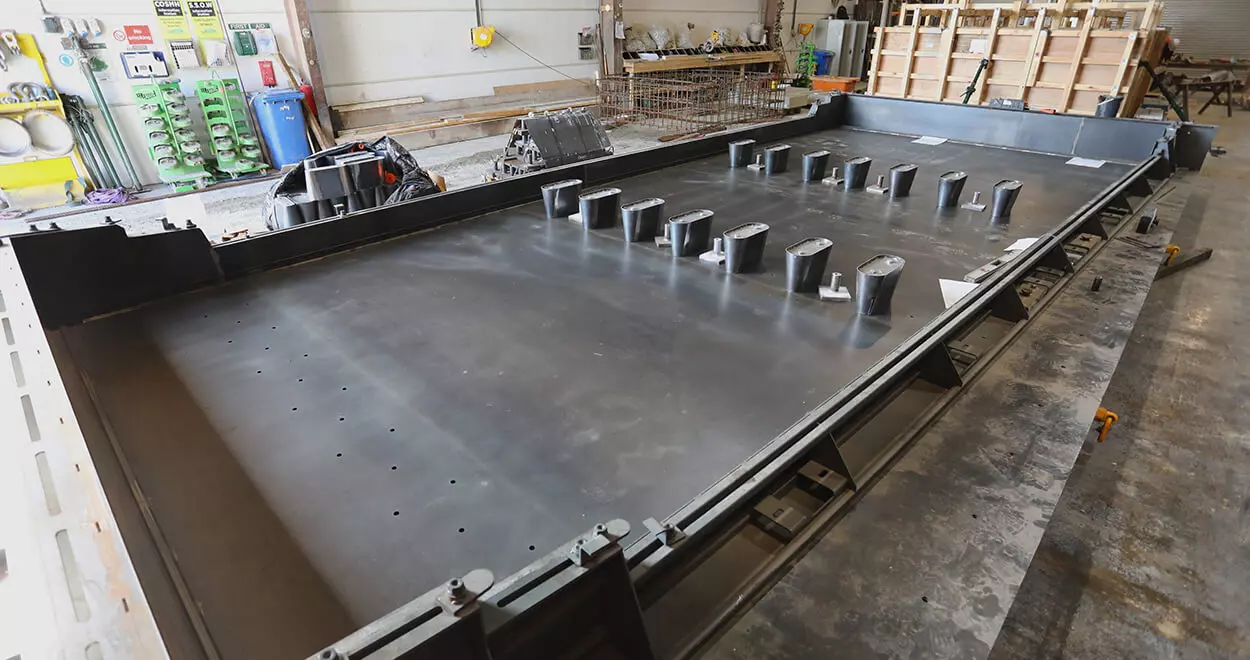
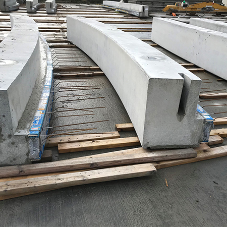
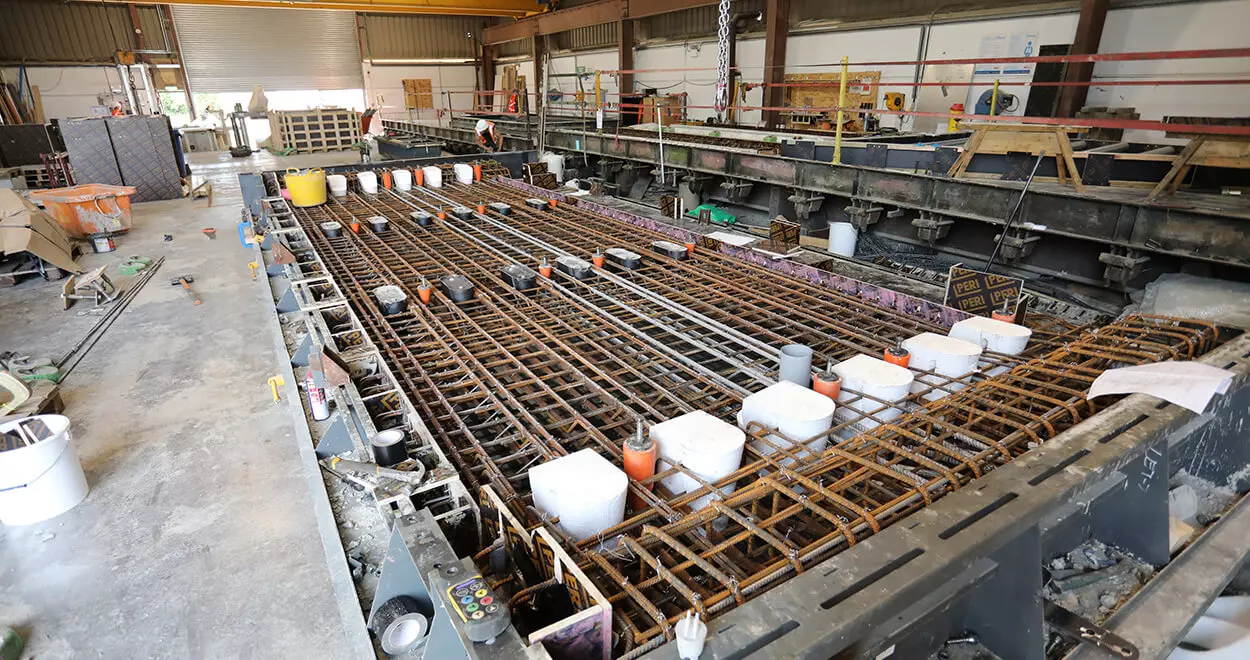
The steel moulds used to create the slabs were designed to be reused, which meant they could be utilised to pour 65 standardised panels and 26 bespoke, in turn reducing material waste at source and improving quality control. Pouring the concrete at Poundfield’s factory in Suffolk also enabled close control of the production process, which meant that none of the standard decks needing reworking, in turn boosting efficiency and providing value for money.
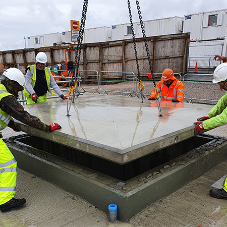
During production, high levels of quality control were maintained by fortnightly factory inspections with Transport for London, while installation methods were also trialled to make sure the project was right first time. Using precast products ensured the slabs could be installed quickly, in turn helping to minimise disruption for drivers and those living around Gallows Corner.
The impact
By working closely together with Costain from an early stage, Poundfield was able to deliver a 37% (155 tCO2e) reduction in embodied carbon for the flyover deck compared with the original design. This is the equivalent to 7,750 mature trees absorbing carbon for one year or driving a car approximately 775,000 miles, which is more than 30 times around the circumference of the world. Costain has since won a NCE (New Civil Engineer) Bridges Award in the “innovation in carbon reduction” category for this work.
In addition, the steel reinforcement used in the precast slabs was produced using an electric arc furnace, which saved an additional 406 kgCO2e/t (56% reduction).
Working collaboratively to cut carbon
By working collaboratively and starting conversations early, Costain, Transport for London and Poundfield were able to successfully reduce the embodied carbon of this project. At the same time, buildability, safety and programme certainty were all improved, allowing the new-look Gallows Corner flyover to continue reliably serving Londoners for many decades to come.
For more information about Poundfield’s low carbon products, visit Poundfield Precast’s website or contact the bespoke concrete team by calling 01449 723 150 or emailing enquiries@poundfield.com
Leading the Way with Ultra-low Carbon Precast Concrete
| T | (01449) 723150 |
|---|---|
| E | enquiries@poundfield.com |
| W | Visit Poundfield Precast's website |
| The Grove, Creeting St Peter, Ipswich, IP6 8QG |
Products by this Company
 poundfield Dec26-file171905.webp)
 poundfield Dec26-file171906.webp)
 poundfield Dec26-file171907.webp)
 poundfield Dec26-file171908.webp)
 poundfield Dec26-file171909.webp)
 poundfield Dec26-file171910.webp)
 poundfield Dec26-file171911.webp)