The design and specification of substructures and the fixing choices are critical to maximising the thermal performance of rainscreen façade systems. Gary Robson, Business Development Manager at EJOT UK, explains why.
According to the Whole Life Carbon Roadmap published by the UK Green Building Council (UKGBC), around 75% to 80% of carbon emissions from the built environment result from the building’s operation and use – a large part of which is for heating and cooling. Improving the energy efficiency of buildings through enhanced envelope insulation is, therefore, extremely important for the UK to meet its net zero goals.
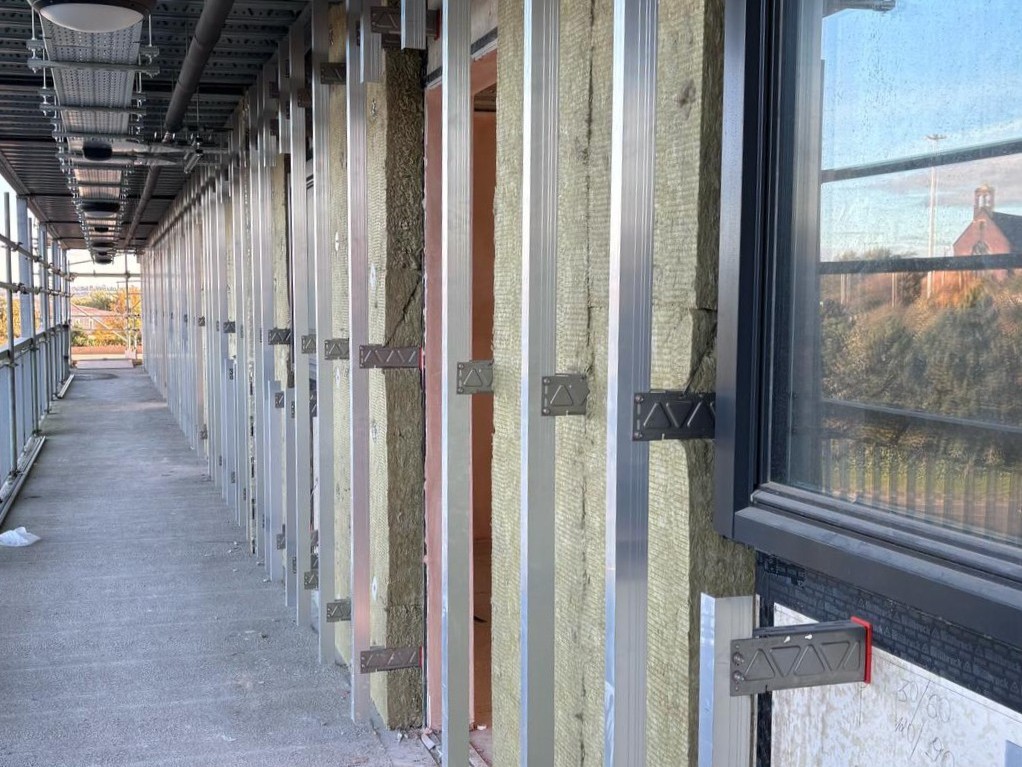
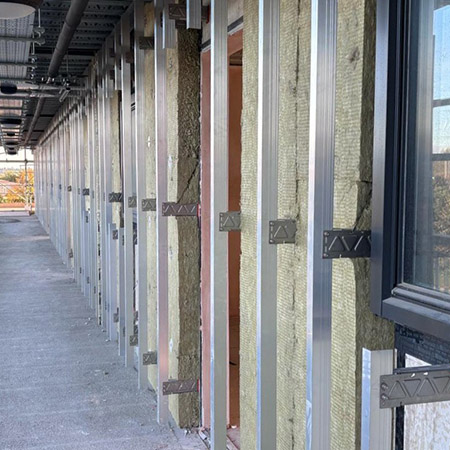
To maximise the thermal insulating capacity of a rear ventilated façade system, the design and specification of the metal substructure used to form it requires careful consideration. Substructures or support framing are formed of metal brackets, rails and fasteners attached to the building substrate, providing the frame onto which the outer cladding materials or fascia can be fixed. This also allows a void to be created for insulation to be installed, plus the vital ventilation and drainage gap.
However, every bracket used to hold the frame and outer cladding to the structure breaks the thermal wrap created by the layer of insulation, creating a thermal bridge. While this thermal bridging effect may seem relatively inconsequential, especially where a deep layer of insulation is specified, it can actually be so significant that it undermines the façade’s overall thermal performance.
Unlocking stainless steel’s potential
While aluminium is the most widely used metal for rear ventilated façade substructures, stainless steel offers significant thermal and structural advantages in next generation construction, as the EJOT CROSSFIX system demonstrates.
Stainless steel’s low thermal conductivity properties illustrate its superior performance. Aluminium brackets used in façade substructures typically have a thermal conductivity of between 160 and 220 W/mK. In comparison, stainless steel’s conductivity ranges between 15 and 20 W/mK, meaning that it is between ten and fifteen times less conductive than aluminium.
Enhancing the material benefits of stainless steel, the thermal conductivity of the EJOT CROSSFIX bracket – known as a Konsole – is reduced further through a thermal break. This is a polyamide element integrated into the bracket design to insulate the metal from the building substrate.
Achieving thermal gains through stainless steel’s greater structural performance
CROSSFIX’s stainless steel brackets substantially reduce heat flow through the façade assembly to improve the overall thermal performance of the rainscreen system. This bridging reduction helps to cut heat losses and energy consumption, as well as lower the risk of localised cold spots for building users. But there is an additional benefit resulting from stainless steel’s increased rigidity versus aluminium.
In certain projects, using CROSSFIX’s stainless steel brackets rather than aluminium may allow bracket centres to be widened because of their higher load capacity and stiffness, subject to a full structural calculation. This potentially means fewer stainless steel brackets may be needed across the façade without compromising the substructure’s ability to accommodate the calculated loads.
With a reduction in the number of brackets per square metre, fewer structural connections link between the wall and the outer cladding, further limiting the opportunity for thermal bridging. In addition, the cumulative effect of reducing thermal bridging using CROSSFIX can be so significant that the insulation thickness can be reduced, while still achieving the target U-value. This may enable the overall wall thickness to be reduced, offering resource and cost savings or the scope to increase the building’s floor space without expanding the building’s footprint.
Making thermal bridge reduction a priority
Every façade project has a different set of challenges and performance goals, but it is only as thermally efficient as its weakest link. In many cases, that will be the structural connections between the building and the cladding panels, which is why the negative impact that metal brackets and sub-frames can have is increasingly being recognised.
CROSSFIX is an excellent example of how system innovation can help developers work towards net zero. It also highlights the need to ensure thermal bridging is reduced within the substructure as a fundamental design principle. By addressing heat loss at every bracket and connection point, designers can create façades that not only meet today's performance standards, but are better prepared for the demands of the future.
Find out more about EJOT UK at www.ejot.co.uk/CROSSFIX.
Reducing the impact of thermal bridging on façade performance
Image Gallery
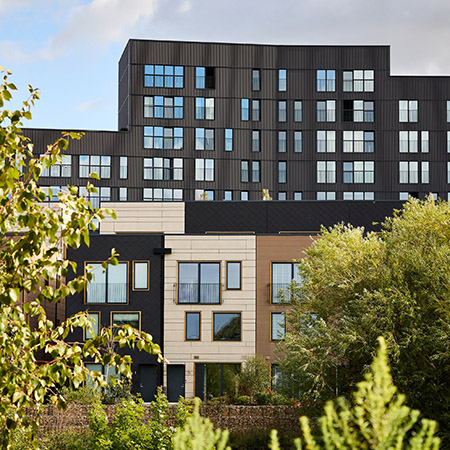
New apartment buildings within the ground-breaking Citu Climate Innovation District in Leeds feature facades created using the all stainless steel EJOT CROSSFIX substructure system.

| T | (01977) 687 040 |
|---|---|
| F | (01977) 687 041 |
| E | infouk@ejot.com |
| W | Visit EJOT UK Ltd's website |
| Hurricane Close, Sherburn Enterprise Park, Sherburn-in-Elmet, Leeds, West Yorkshire, LS25 6PB |

Categories
Facades Fixings and fasteners Flat wall cladding