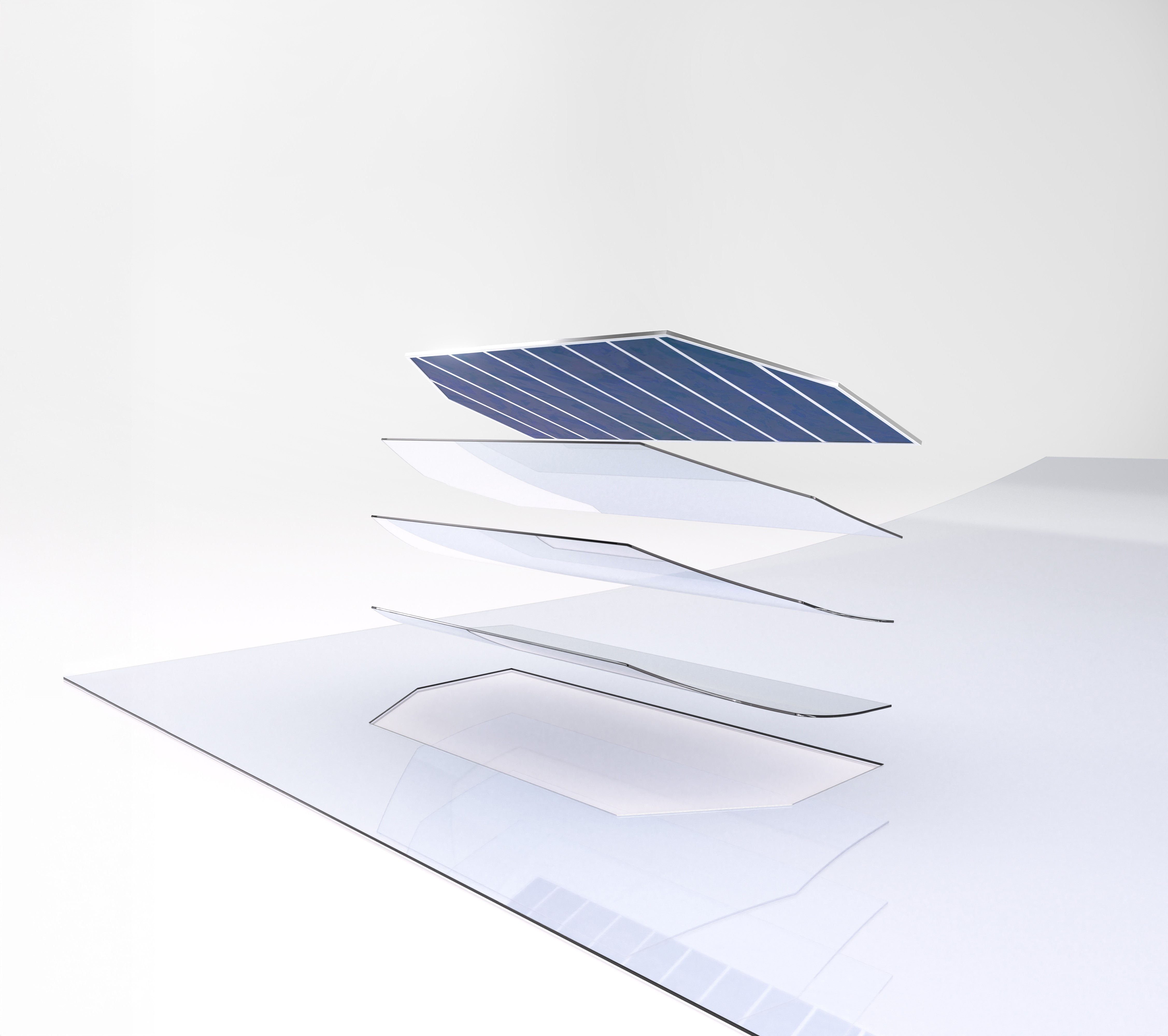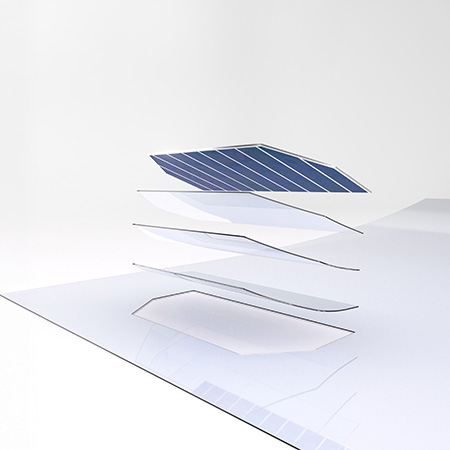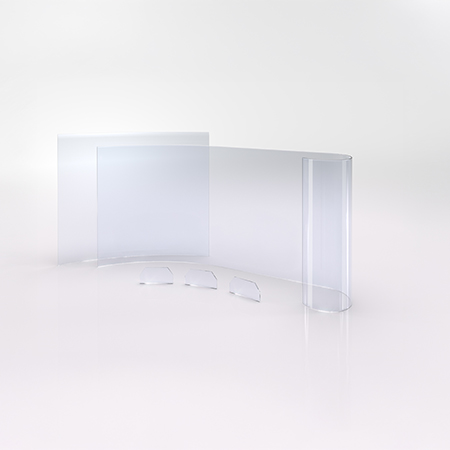
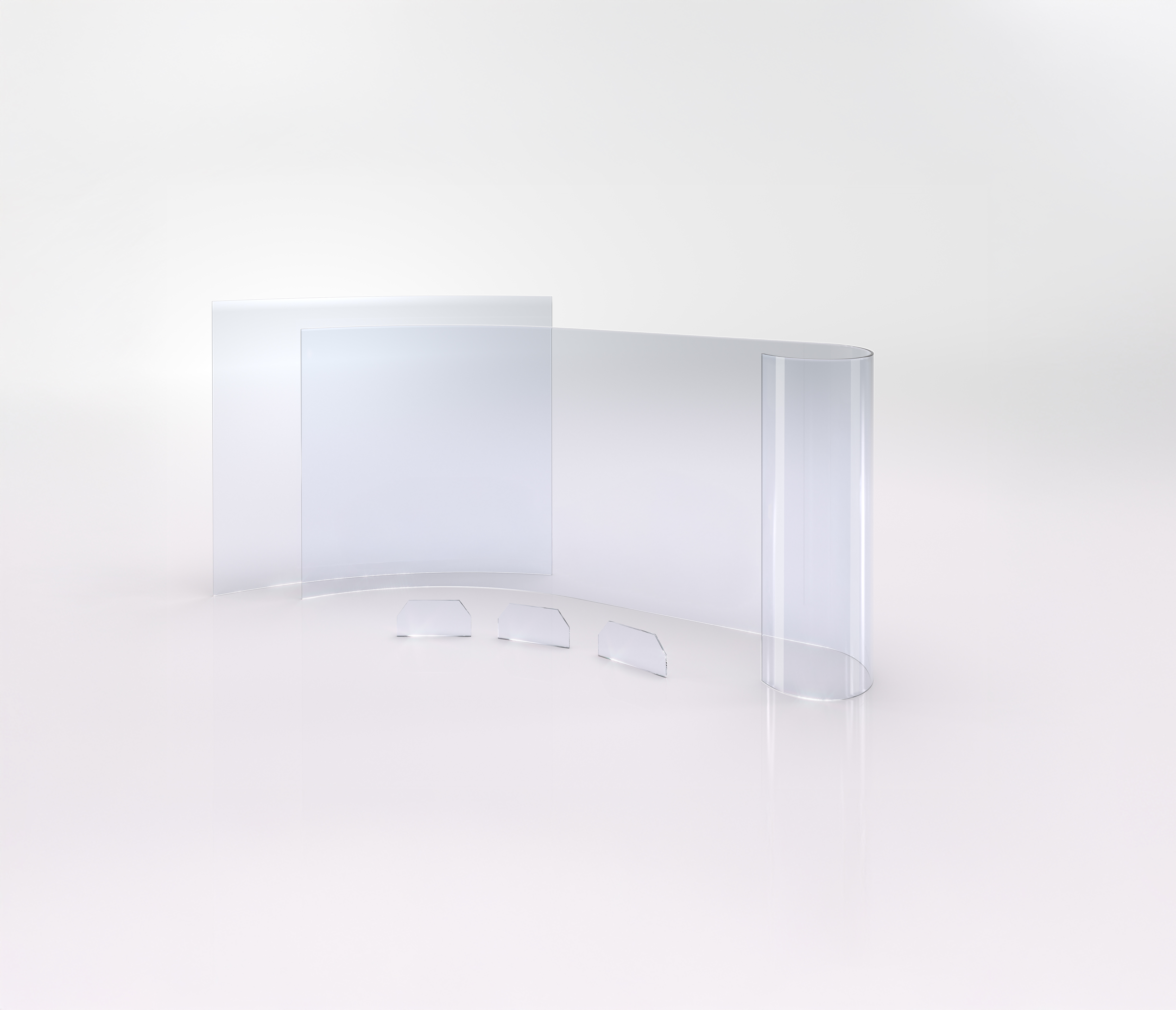

SCHOTT® Solar Glass exos provides enhanced radiation resistance and optical performance for simple silicon cells up to III-V multijunction satellite solar cells.
Jointly developed with Heilbronn-based AZUR SPACE Solar Power GmbH, SCHOTT’s new cover glass was supported by funding from the European Space Agency (ESA).
Engineered for use in both space agency missions and satellite constellations, this fully certified solar cell cover glass delivers high scalability and cost efficiency.
SCHOTT and AZUR SPACE have jointly developed a new solar cell cover glass for space applications, developed with funding by the European Space Agency (ESA) and the German Aerospace Center (DLR). The innovative material combines outstanding radiation resistance with high optical transmission, ensuring reliable performance even in demanding orbital environments. The collaboration enables a stable and scalable European supply chain for space-qualified cover glass tailored for next-generation satellite power systems. SCHOTT will present exos as well as other materials for astronomy and space applications from November 18 to 20 at the Space Tech Expo Europe at Booth H60 in Bremen, Germany.
CHOTT, a global leader in specialty glass and advanced materials, today announced the launch of SCHOTT® Solar Glass exos, an innovative solar cell cover glass designed for next-generation space missions. Developed with funding from the European Space Agency (ESA) and supported by the German Aerospace Center (DLR), exos was developed together with AZUR SPACE Solar Power (a 5N Plus company), Europe’s leading developer of multi-junction solar cells, which also conducted testing and initial validation. The new solar cell cover glass is engineered to deliver optical stability, thermal compatibility, and broad scalability for advanced satellite applications. The exos collaboration combines SCHOTT’s materials expertise with AZUR SPACE’s technology leadership to deliver a cover glass compatible with a wide range of solar cell types, from silicon cells to advanced III-V multijunction solar cells, which are the industry standard for modern satellites.
Protecting Power in Space
Every space mission relies on solar cells to power satellites and spacecraft. But space is an unforgiving environment: intense radiation, rapid temperature fluctuations, and the demand for uninterrupted performance push conventional cover glasses to their limits. Ensuring that solar cells remain efficient for long missions requires an innovative protective solution.
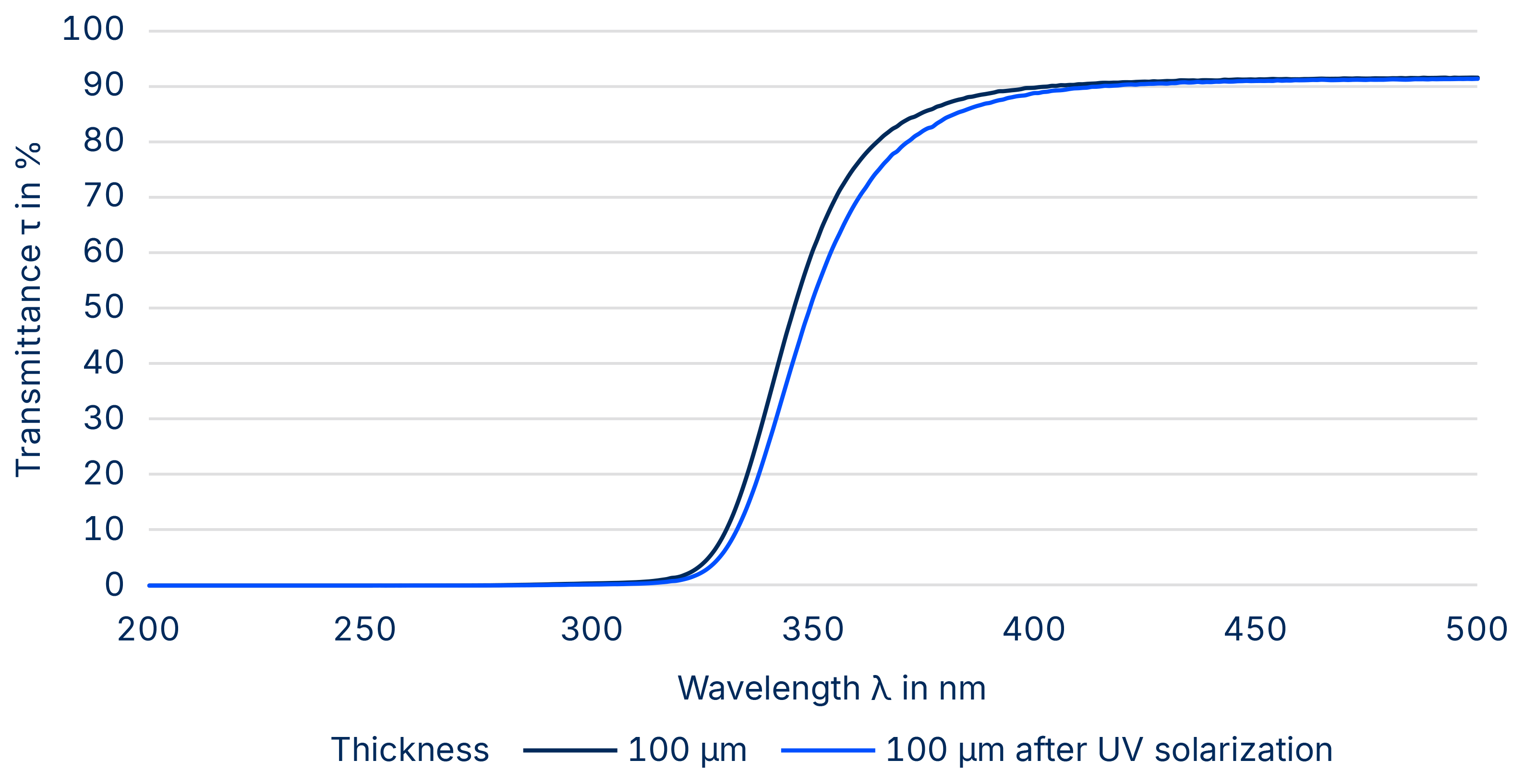
SCHOTT® Solar Glass exos features an advanced design for long-term performance in demanding space environments. Its optimized composition provides exceptional UV absorption and optical stability, maintaining reliable protection and high transmission even after extended radiation exposure. The glass is highly resistant to solarization, with transmission characteristics that remain virtually unchanged over time — a key advantage for ensuring consistent efficiency in satellite solar cells and optical assemblies. Additionally, the precisely tuned UV transmittance edge of SCHOTT® Solar Glass exos allows manufacturers to fine-tune UV protection by selecting the appropriate glass thickness. This controlled cutoff design shields underlying adhesives and sensitive materials from premature UV exposure, enhancing durability and long-term bonding stability.
With a coefficient of thermal expansion (CTE) of 6.9 × 10⁻⁶ K⁻¹ precisely matched to GaAs solar cells, exos minimizes mechanical stress and enhances structural integrity under thermal cycling. Available in scalable formats and customizable thicknesses, it has been engineered to meet demanding mission profiles across LEO, MEO, and GEO orbits. The cerium-doped material is undergoing qualification in accordance with European Cooperation for Space Standardization (ECSS) standards.
The partnership between SCHOTT and AZUR SPACE highlights Europe’s drive to advance space materials innovation and build a resilient, scalable supply chain for the rapidly expanding satellite industry. “Our collaboration with AZUR SPACE demonstrates how close cooperation can deliver space-qualified solutions at scale,” said Marc Schneider, Head of SCHOTT’s Special Applications Product Group. “As we expect that the demand for satellite constellations will continue to expand, we’re excited to provide the industry with a reliable, high-performance solar cell cover glass to help power missions in every orbit.” AZUR SPACE noted that the collaboration marks a critical step toward establishing a resilient supply chain for next-generation satellite power systems. “AZUR SPACE is proud to work with SCHOTT to secure a stable and large-scale, 100% European supply chain for solar cell assemblies,” said Executive Vice President Specialty Semiconductors, Roland Dubois, head of AZUR SPACE. “This collaboration strengthens Europe’s technological independence and ensures the reliable availability of high-performance solar power solutions for future space missions.”
Learn more about the SCHOTT x AZUR SPACE collaboration.
SCHOTT launches high-performance cover glass for next-generation space solar cells
Image Gallery
SCHOTT® Solar Glass exos provides enhanced radiation resistance and optical performance for simple silicon cells up to III-V multijunction satellite solar cells. Photo: SCHOTT
Jointly developed with AZUR SPACE Solar Power GmbH, SCHOTT’s new cover glass was supported with funding from the European Space Agency (ESA). Photo: SCHOTT

| T | +44 (0) 3300 021340 |
|---|---|
| E | info.uk@schott.com |
| W | Visit SCHOTT UK's website |
| Wolverhampton Science Park, Glaisher Drive, Wolverhampton, WV10 9RU |
Products by this Company