Maximising fire safety in rainscreen façade systems is not only about choosing the right cladding panels and type of insulation, but about ensuring the substructure will withstand the impacts of fire. Gary Robson, Business Development Manager at EJOT UK, explains why.
The fire performance of rainscreen façade systems is under greater scrutiny than ever since the publication of the Building Safety Act, especially for higher risk buildings (HRBs). That puts every material choice under the spotlight with attention often focused on the fire resistance or level of combustibility of the visible cladding panels and insulation, along with the integration of cavity barriers.
However, to ensure compliance with the building regulations, successful rainscreen design relies on the interaction of multiple components, including the substructure. No single component works in isolation – the façade must function as a complete engineered system.
Despite often being overlooked at the early design stages, the substructure is key to the façade’s structural integrity. It must accommodate a variety of loads including the weight of the whole façade system (the dead load), wind, impact and building movement. And it has to be able to manage thermal expansion and contraction and ensure long-term stability over the building lifecycle. In short, a façade is only as good as the structure supporting it.
The substructure’s role in fire safety
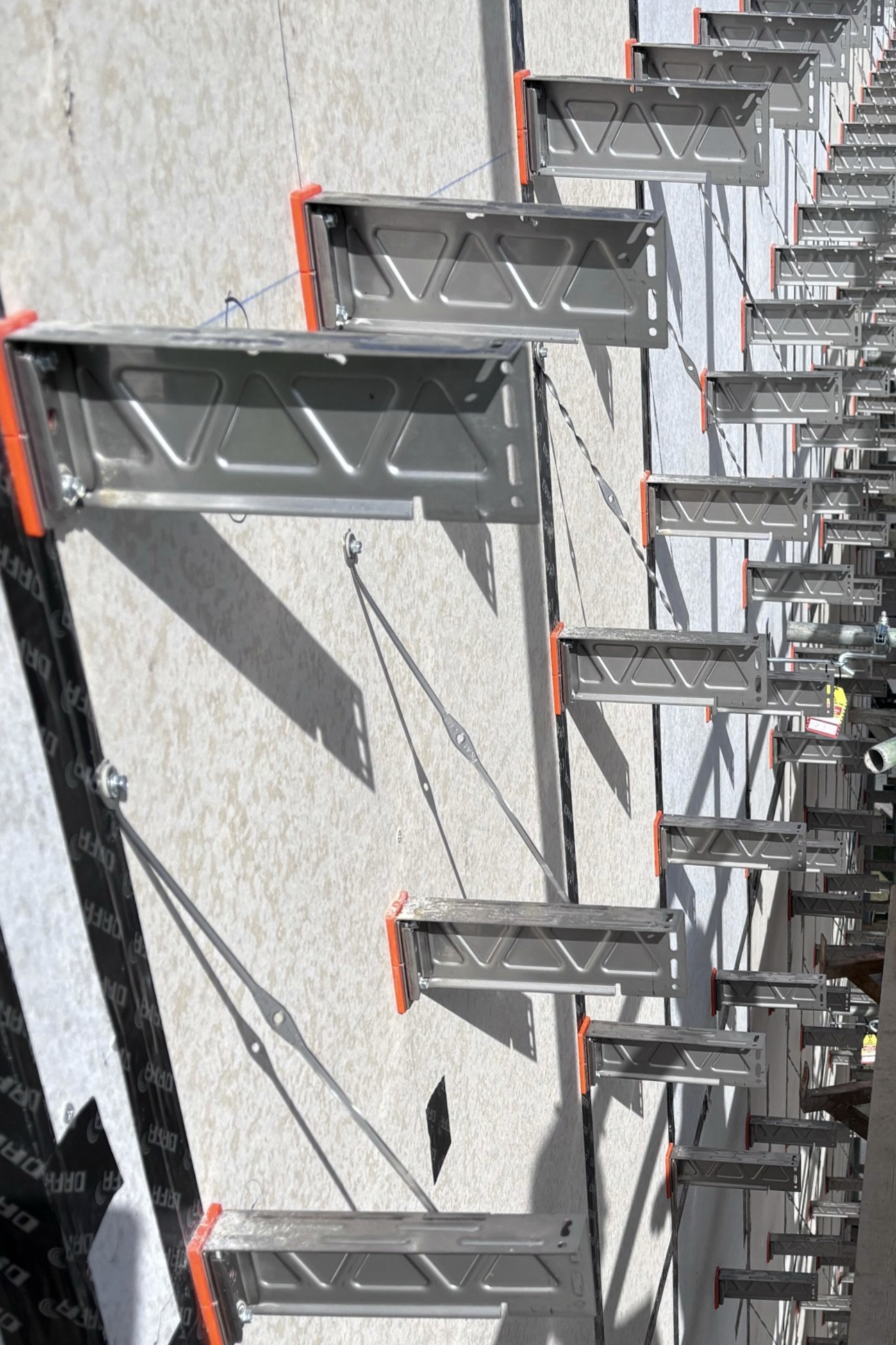
Meeting fire performance requirements means having a substructure that will provide predictable behaviour throughout the design life of the building, as well as during a fire. This is why stainless steel substructures like EJOT CROSSFIX are gaining appeal.
While aluminium substructures continue to be used successfully in compliant façade systems, stainless steel offers enhanced retention of structural properties at elevated temperatures,
making it an attractive option where additional fire resilience is sought. This is primarily because stainless steel can more effectively withstand the effects of elevated temperatures resulting from fires compared to aluminium or hybrid materials. Hence, a stainless steel substructure may help the system retain structural support for a longer period in conditions where the temperature is significantly raised due to a fire compared to an equivalent aluminium design.
The key reason for this lies with the difference between the starting melting points of the two materials. Stainless steel begins to melt at temperatures above 1375 °C, compared to standard aluminium’s 650 °C. As a result, stainless steel substructures maintain good strength at high temperatures, retaining around 55% of their strength at 700 °C.
Given the stainless steel composition of the CROSSFIX system’s Konsole brackets, fasteners and fixings, it has an A1 reaction-to-fire classification under EN 13501-1 while also offering excellent retention of mechanical properties at elevated temperatures. This provides specifiers and architects with a complete engineered system from a single source that combines structural performance, durability and enhanced fire resilience, as independently assessed and documented in its supporting European Technical Assessment (ETA).
Find out more at www.ejot.co.uk/CROSSFIX
Why fire safety starts with the system behind the façade
Image Gallery
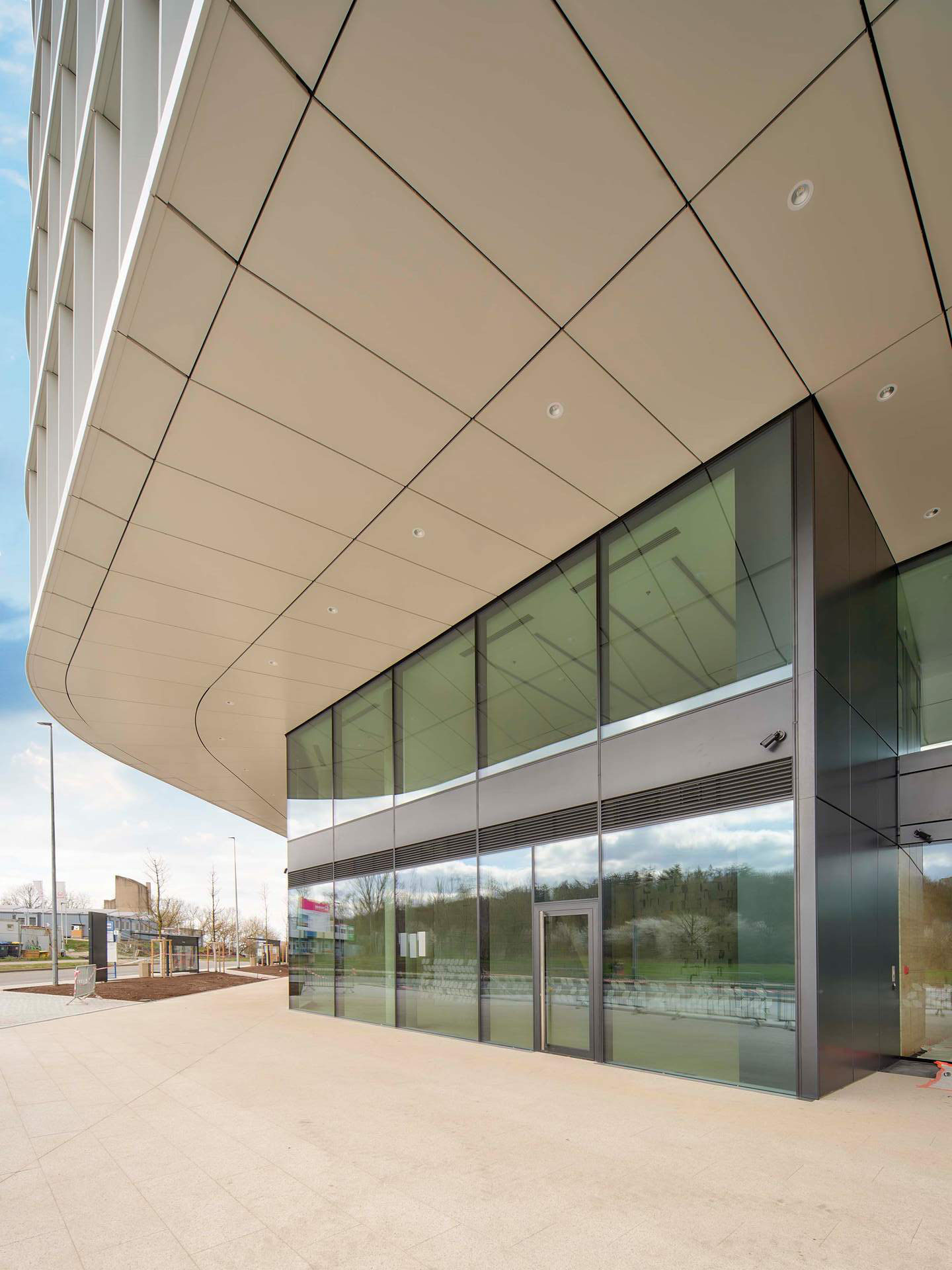
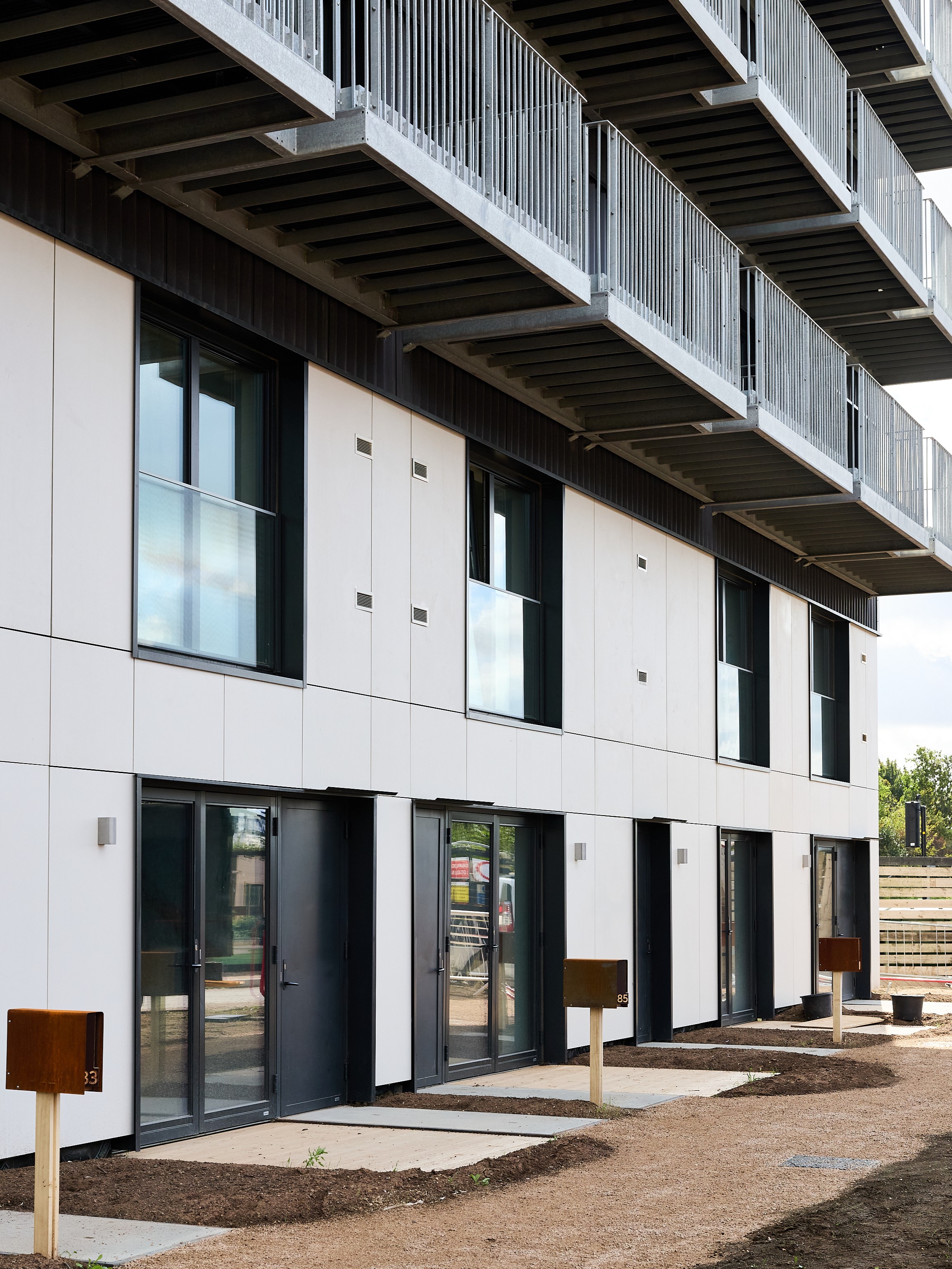
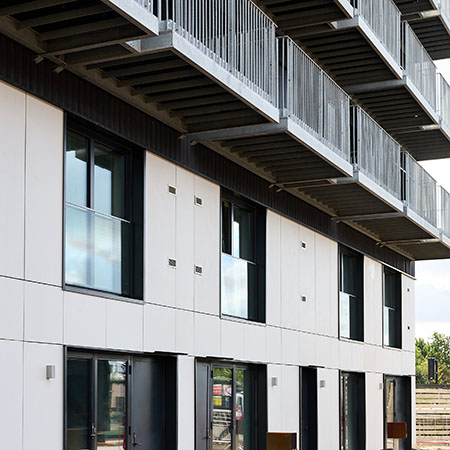
Compliant rainscreen and rear ventilated facades for two apartment buildings at the Citu Climate Innovation District in Leeds were constructed with the EJOT CROSSFIX substructure.

| T | (01977) 687 040 |
|---|---|
| F | (01977) 687 041 |
| E | infouk@ejot.com |
| W | Visit EJOT UK Ltd's website |
| Hurricane Close, Sherburn Enterprise Park, Sherburn-in-Elmet, Leeds, West Yorkshire, LS25 6PB |
-Bcropped-file171770.jpg)
Categories
Safety Flat roofing Flat wall cladding