The Covid-19 crisis has added another dimension as the industry focuses on collaborative working to build back better and create a more sustainable and resilient built environment.
Tarmac is the UK’s leading supplier of sustainable building materials and construction solutions. The company aims to deliver the infrastructure needed to grow the economy, while also creating a more sustainable built environment to support future prosperity.
Learning aims
This CPD is intended to be of benefit to local authorities, highways agencies, consulting engineers, architects and contractors. All of those involved in highway construction are coming under increasing pressure to tackle the issues which are contributing to climate change and other forms of environmental damage.
The aim of the CPD is to provide these audiences with the tools they need to respond to current challenges. We aim to provide signposts to the options which are currently available to allow designers and constructors of highways to work in a more sustainable way. We will provide an understanding of what the concept of sustainable highways means and the technical aspects that underly them.

What is a sustainable highway?
A sustainable highway has to balance two apparently competing objectives, one being to serve the core purpose of a highway, to facilitate physical communication and transportation, enabling economic activity and growth, while at the same time playing its part in tackling the climate crisis and other environmental issues that we face.
While road construction projects do have an environmental impact due to their use of raw materials, innovations in paving solutions means whole life carbon and financial costs can be significantly reduced while road durability is improved.
With a little thought, earlier engagement, greater understanding and some investment in currently available techniques, it is fully possible for much more sustainable highways to be built.
How to build a sustainable highway
The Department for Transport suggests a 15-step process for ensuring success in the construction of a sustainable highway.
Key priorities are to ensure buy-in from all relevant stakeholders, developing a procurement strategy which promotes sustainability and creating a sustainability culture throughout the supply chain. Product selection should be designed to improve asset management over a period of time, not based solely on what is cheapest or most expedient at the time of construction.

High Performance Asphalts to increase the sustainability and durability of highways
Any road surface has to operate in one of the most aggressive environments imaginable. It is subject to extremes of temperature, freeze, thaw, water penetration, loadings and vibration from vehicles, not necessarily delivered vertically depending on location, and potentially fuel and chemical spillage as well.
A highway which lasts longer and requires limited maintenance during its lifetime is going to have a lower environmental impact than one which has to be completely replaced within a relatively short time period or one which requires significant periodic maintenance.
Manufacturers are now offering a new generation of high performance asphalts which have been developed specifically to offer enhanced resistance to reflective cracking and road surface deformation. These products include a high performance Polymer Modified Binder and selected aggregates, to enhance strength, flexibility and durability.
Certain solutions are offered in a single layer format, surface and binder courses, reducing construction time and overall quantity of materials required. The use of such solutions reduces the required depth of any future reconstruction. Adopting a whole life approach will save materials and time over the lifetime of the highway.
Warm Mix Asphalts for reduced carbon emissions
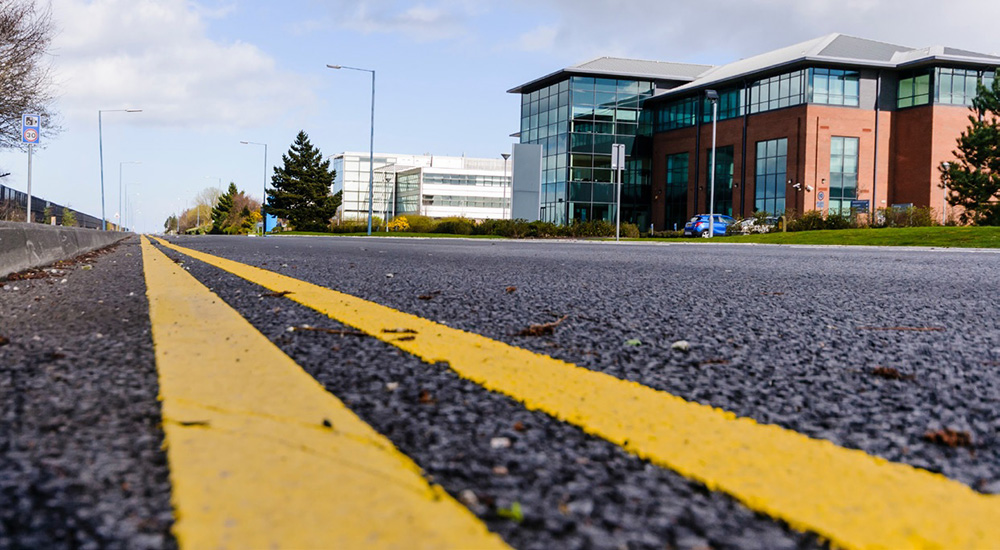
The All-Party Parliamentary Group (APPG) on Highways issued a report in 2019 which highlighted the benefits of Warm Mix Asphalts (WMA), since it can offer CO2 reductions of up to 15%. These can be manufactured and laid at a temperature 40C lower than traditional Hot Mix Asphalts (HMA). This leads to lower carbon emissions, as well as offering time savings. It is also safer for the workforce, since the lower temperature produces fewer fumes, which can reduce visibility in areas where HMA is used.
In addition, in the age of Covid-19, there is also the option to reduce the use of hot HRA and PCCs by using a suitable warm mix alternative which eliminates the need for the additional personnel and the chipping machine on site, thereby reducing social distancing challenges.
While WMA is quite widely used in many countries, the usage in the UK lags far behind at only around 4%. The APPG estimates that if all asphalt production in 2017 had been WMA, it would have saved 61,000 tonnes of CO2, the equivalent of 300 million miles of car travel. An additional environmental benefit of WMA is that it arrives at trafficking temperature quicker and so reduces the incidence of queues and slow moving traffic around roadworks, which lead to higher fuel consumption.
The APPG stated very clearly that the industry was taking a lead with regard to the adoption of WMA and it is up to the relevant authorities to get on board and help make WMA the norm for laying new asphalt.
Warm Mix Asphalts versus Hot Mix Asphalts
WMA
Lower temperature (- 40%)
CO2 emissions reduced (-15%)
Enhanced safety
Rapid installation
Efficient
HMA
Higher temperature
High CO2 emissions
Safety impacted by fumes
Slower installation
Inefficient
Use Single Layer Asphalts to cut materials usage and carbon emissions
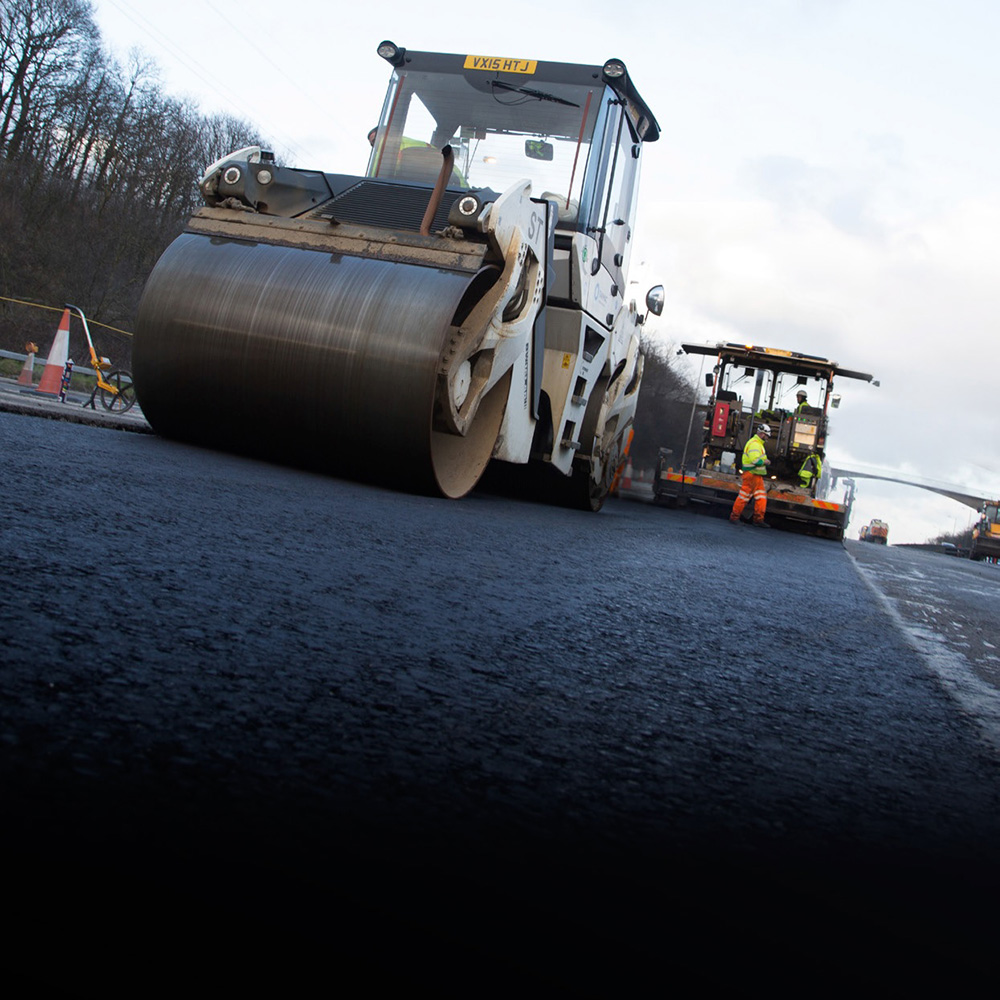
An important development has been the innovation of single layer asphalts which take the place of multiple surface and binder course layers. This helps to reduce overall aggregate volumes on a project and reduces carbon emissions caused by transporting materials large distances.
There are a number of products available on the market today which provide a single layer solution, both for highway construction and repairs. These use Stone Mastic Asphalt (SMA) to provide high performance and durability, while overall using less material than conventional multi-layer solutions. Some products are suitable for a wide variety of different types of highway, while there are also products which have been developed for specific applications, such as car parks and service roads.
Single Layer Asphalts versus Multiple Layer Asphalts
Single layer asphalts
Quick to lay
Reduced materials volumes
Reduced CO2 emissions
Reduced waste
Improved finish due to better heat retention
Traditional multiple layer asphalts
Relatively slow to lay
Higher materials volumes
Higher CO2 emissions (more haulage journeys)
More waste
Compaction more difficult
Increase recycling with Rubber Modified Asphalts
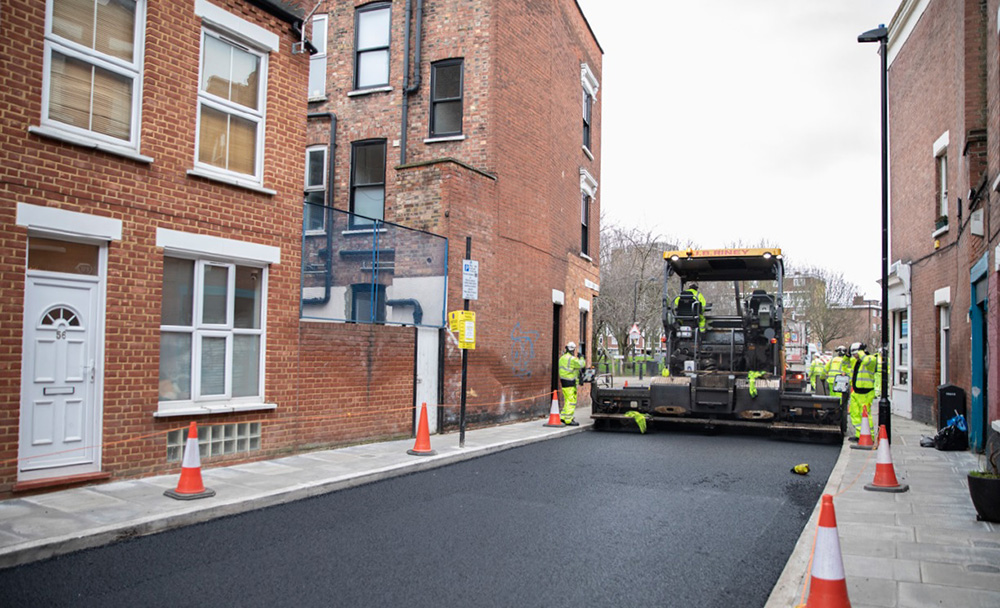
To reduce the requirement for primary materials in road construction, recycled materials can be used to form rubber-modified asphalts. These use recycled tyres in a Warm Mix Asphalt to produce an environmentally sustainable product with a reduced carbon footprint.
Around 40 million waste tyres are currently produced annually in the UK. Incorporating some of these into asphalt production, in which the tyres are fully recycled in the UK, can lead to an 8% reduction in CO2 emissions. Rubber-modified asphalts normally contain the rubber from one tyre in every tonne of asphalt, meaning that about 500 tyres can be recycled in every kilometre of road.
This initiative is being warmly welcomed by the industry. "Coventry City Council is delighted with the rubberised asphalt trial; we hope we can use more of the product across the city in the future to help divert waste tyres from landfill and incineration to reduce the carbon footprint for road construction projects in Coventry.” Rob Little - Senior Engineer, Highways Technical, Coventry City Council.
Leading suppliers are now making this system available in trials across the country, including motorways. Rubber Modified Asphalt can be used as a direct alternative to 50 pen SMA, delivering the same performance in terms of regularity, texture and maintenance requirement.
A further category of recycled product is where road arisings are used in sub-surface reconstruction, combined with foamed bitumen and cold paving technology. This is completely closed-loop road reconstruction, virtually eliminating waste, offering savings in transport and disposal costs. The cold mixing temperature means major reductions in energy consumption and carbon emissions. The proven foamed bitumen products now on the market are approved for encapsulating recycled asphalt paving (RAP), removing the need for costly waste disposal. A number of companies are now investing in the equipment required to be able to use a higher proportion of RAP in highways construction.
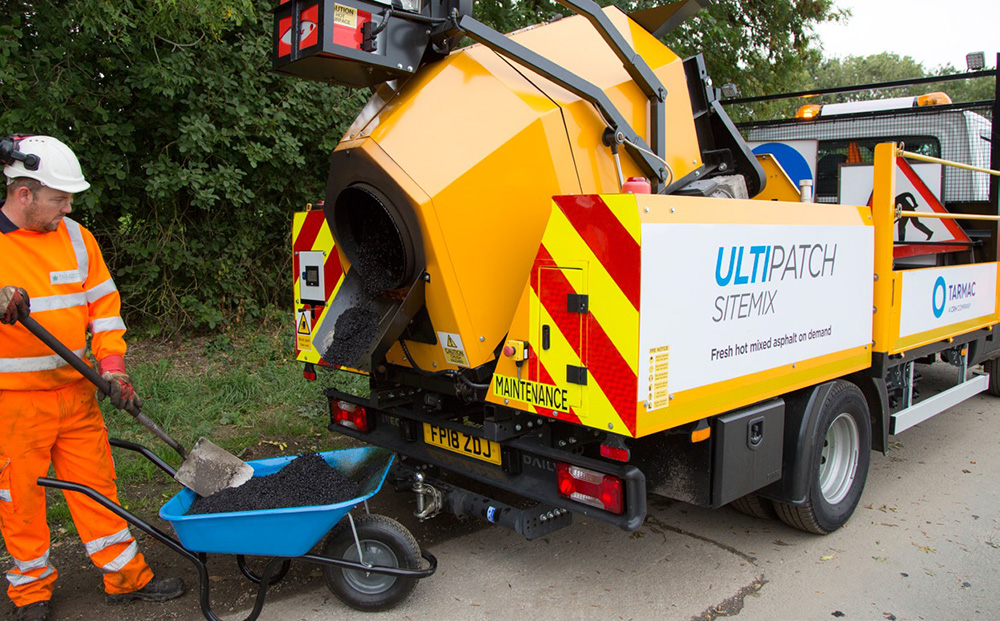
On-site mixing technology helps cut waste
Waste can be a major environmental issue with highway construction. All work should be carried out in accordance with the Waste Management Regulations. In addition to the environmental impact of quarrying and transporting excess quantities of primary materials, certain materials are hazardous and can have a negative environmental impact. These include coal tar, which can be found in some older asphalt mixtures. This contains polycyclic aromatic hydrocarbons, which can escape during a heating process. Hazardous materials can leach from unbound surfaces when they come into contact with water or moisture.
On-site mixing of asphalts is big step forward in the reduction of waste and is a technology which is now available to highways contractors. Site-mixed asphalt provides the contractor with exactly the right quantity of freshly mixed material for the job in hand. As well as helping to control waste, this solution is particularly handy in busy urban locations and also on remote rural jobs, which may be located some distance from the nearest asphalt plant.
Prolonged storage and transportation of conventional asphalts can make them unusable, leading to wasted product. There are now hotboxes available which help to avoid waste and provide a more reliable and cost-effective solution. These use the latest binder technology to enable significantly longer storage, reduced waste and improved workability.
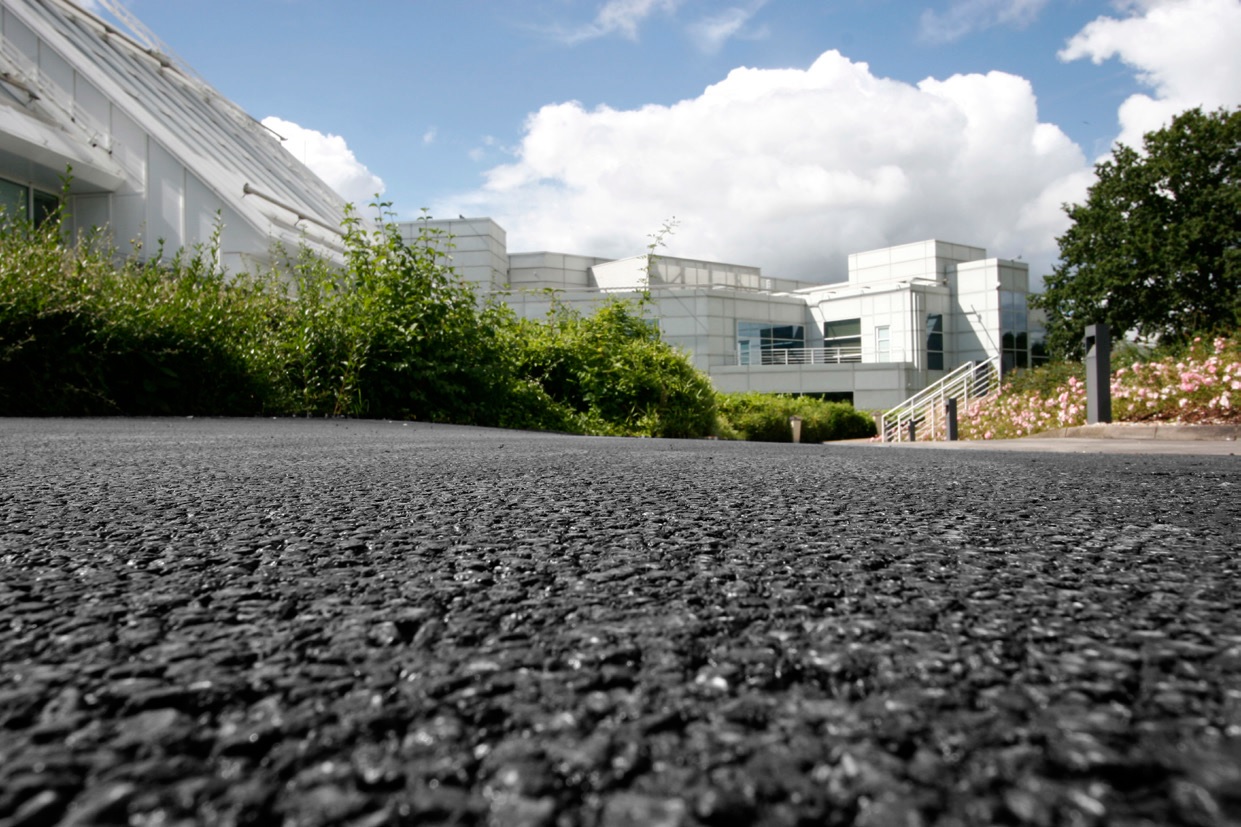
Porous Asphalts improve drainage and help prevent flooding
A Government report found that around 10% of roads are now at risk of flooding. It is also true that the design of roads themselves can cause flooding, where insufficient porosity causes excess run-off, localised flooding issues and potentially erosion. The construction of roads affects the natural surface and subsurface drainage pattern of watersheds or hill-slopes. The provision of adequate drainage is important to prevent the accumulation of excess water or moisture on or within road constructions that can adversely affect their material properties, compromise overall stability and affect driver safety. Drainage must cope with water from the carriageways, hard shoulders, foot/cycle paths, verges, and adjacent catchment areas.
There are now a number of porous asphalts on the market which have the ability to introduce additional porosity to the construction of the road surface. Their use will provide a sustainable drainage system, meeting the requirements of relevant legislation and reducing the risk of flooding by managing surface water at source. These products will generally only be suitable for estate roads with low traffic speeds, car parks and service roads. Since these are the types of location which tend to be nearest to buildings, they are among the locations where good drainage is most important.
Use of smart technology in sustainable highway construction
A robust logistics plan is important in the construction of a sustainable highway. This will be designed to optimise vehicle movements and processes, using relevant technology and software. It is important that there is logistical support for recycling, so that surplus materials and arisings can be stored and processed.
The case study of the resurfacing of the motor racing circuit at Silverstone can be cited as an example of how a major logistical operation was carried out to resurface the entire track in one sweep with minimal variance in surface height to ensure there were no breaks or ridges in the asphalt layer. It was an achievement that was made possible to the highest of standards by the use of smart technology and supply chain excellence. It showed the standard that any construction project should aim for to maximise efficiency and minimise waste.
“Sustainable construction solutions are at the heart of what Tarmac offers its customers,” says John Husbands, Marketing Manager – Materials. “We have therefore developed solutions to meet many of the sustainability challenges posed by highway construction. We have outlined a number of the key sustainability issues in this CPD, and highways professionals will be able to find branded solutions to address these and other areas by referring to our website or contacting Tarmac personnel.”
When you’re ready to take the test, click here.