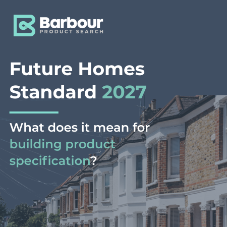
As the Future Homes and Buildings Standards are set to come into force in England from March 2027, the way new homes are designed, heated and powered is set to change.
The new standards aim to ensure that new homes and non-domestic buildings are constructed with low-carbon heating and high levels of energy efficiency, reducing the need for further retrofit work as the electricity grid continues to decarbonise.
For architects, specifiers, housebuilders and building product manufacturers, the changes place an even greater focus on selecting products and systems that can contribute to efficient, lower-carbon buildings.
What is changing in 2027?
The Building Regulations etc. (Amendment) (England) Regulations 2026 introduce changes to the Building Regulations in England, supported by new and updated statutory guidance.
For most building work, the new standards and accompanying guidance take effect from 24 March 2027, subject to transitional arrangements.
This includes the new Approved Document L: Energy and greenhouse gas emissions, alongside the 2026 edition of Approved Document F: Ventilation.
The changes cover a broad range of areas, from low-carbon heating and building services to renewable electricity generation and ventilation.
So, what could this mean for product specification?
A greater focus on low-carbon heating
One of the most significant areas of change is heating.
New homes built to the Future Homes Standard will need to use low-carbon heating alongside high levels of energy efficiency. This is likely to make technologies such as heat pumps an increasingly important consideration during the early stages of building design.
However, heating systems do not operate in isolation. Their effectiveness can depend on everything from the building fabric to heat distribution and controls. Specifiers can explore a wider range of heating, cooling, ventilation and air conditioning products on Barbour Product Search.
The updated Approved Document L includes guidance covering heat pump controls, limiting heat loss from low-carbon heating systems, minimum efficiencies for building services and insulation for building heat distribution systems.
For specifiers, this means considering how individual products work together as part of the overall building rather than viewing heating, insulation and controls as separate elements.
Renewable electricity moves further into the spotlight
The new regulations also introduce a requirement relating to on-site renewable electricity generation for new dwellings and buildings containing dwellings.
Solar photovoltaic systems are therefore likely to remain an important part of conversations surrounding new-build specification, with the Government’s Future Homes and Buildings Standards guidance providing further information on the changes.
Our Product Hubs also provide access to information and resources covering Solar PV and other building product areas.
This also creates wider specification considerations, including roof design, mounting and fixing systems, weatherproofing, electrical infrastructure and energy storage.
Considering these requirements earlier in the design process can help ensure different building components and systems are compatible before construction begins.
Building fabric remains fundamental
New technology may attract much of the attention surrounding the Future Homes Standard, but the performance of the building fabric remains fundamental to creating an energy-efficient home.
Insulation, windows, doors, roofing products and other elements of the building envelope all influence heat loss and overall energy performance. Barbour Product Search provides access to building products across categories including insulation, windows, doors and roofing, helping specifiers research solutions for different project requirements.
Good specification therefore means looking beyond an individual product’s headline performance and considering how products perform when incorporated into the complete building.
Thermal bridging, airtightness, installation and compatibility between different components can all affect whether the intended performance is achieved in practice. Further information relating to thermal performance and energy efficiency can also be found through our Technical Hubs.
Energy efficiency and ventilation must work together
Improving airtightness and reducing unwanted heat loss also makes effective ventilation increasingly important.
Approved Document F provides guidance on meeting ventilation requirements, including requirements relating to ventilation systems and indoor air quality.
Creating energy-efficient homes therefore requires a balanced approach. Buildings need to retain heat effectively while still providing appropriate ventilation to support indoor air quality and occupant comfort.
This makes coordination between insulation, airtightness measures, windows, ventilation products and building services particularly important during specification.
Product information is becoming increasingly important
As building requirements become more detailed, specifiers need reliable information to help them compare products and determine whether they are suitable for a particular application.
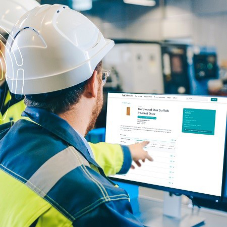
Technical data, performance information, certificates, installation guidance, BIM objects and other supporting documentation can all help architects and specifiers make more informed decisions. The construction products directory on Barbour Product Search enables specifiers and buyers to research products, manufacturers and technical information for their projects.
For manufacturers, making this information easy to find and understand can be just as important as communicating the wider benefits of a product.
Clear technical information can also help demonstrate how a product fits within a wider building system and contributes towards project requirements.
Preparing for the Future Homes Standard
Although the main changes do not come into force until March 2027, the specification decisions that will affect future projects are already being made.
For architects, contractors and housebuilders, understanding the new requirements early provides an opportunity to consider how heating, renewable energy, ventilation and building fabric can work together.
For manufacturers, it is an opportunity to review how product performance is communicated and ensure architects and specifiers can easily access the technical information they need.
As the industry prepares for the next stage of more energy-efficient construction, effective product specification will continue to play an important role in turning regulatory requirements into buildings that perform as intended.
Related Blog Articles